|


|

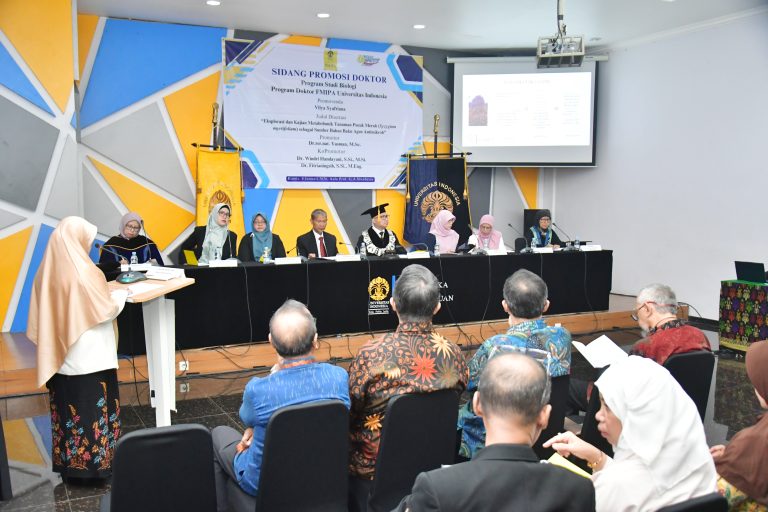
Depok, January 8, 2026 — Red shoot leaves (Syzygium myrtifolium), long known as an ornamental plant for their striking foliage, have now demonstrated remarkable potential as a source of herbal medicine based on secondary metabolites, particularly as natural antimicrobial agents. These findings were presented by Vilya Syafriana during an open doctoral promotion examination in the Biology Study Program, Faculty of Mathematics and Natural Sciences (FMIPA), Universitas Indonesia, held on Thursday (January 8) at the Prof. Dr. G.A. Siwabessy Auditorium, FMIPA UI, Depok.
Through her dissertation entitled “Exploration and Metabolomic Study of Red Shoot (Syzygium myrtifolium) as a Source of Raw Materials for Antimicrobial Agents,” Vilya presented the results of her research conducted using an integrated approach. This included raw material characterization, extraction optimization, antimicrobial activity testing, analysis of the influence of growing locations, and metabolomic studies using Liquid Chromatography–Mass Spectrometry (LC–MS)—a modern analytical method for detailed detection of plant chemical constituents. For this research, Vilya successfully earned a Cum Laude distinction.
“This research reveals the significant potential of Syzygium myrtifolium as a source of raw materials for herbal medicines based on secondary metabolites, particularly as natural antimicrobial agents,” Vilya stated before the examination committee.
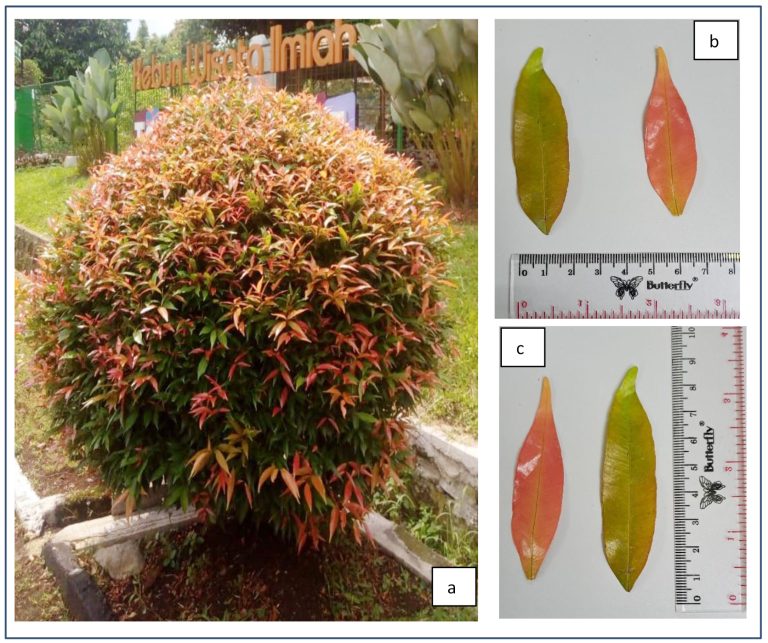
The results showed that the developmental stage of the leaves—young or mature—significantly influences the physicochemical properties, metabolite composition, and antimicrobial activity of red shoot leaves. Ethanol extraction yielded the highest extract recovery, while ethyl acetate was more effective in extracting flavonoid compounds. The antimicrobial activity of red shoot leaves was found to be more effective against Gram-positive bacteria than Gram-negative bacteria. Although the growing location affected bioactivity, the developmental stage of the leaves had a more dominant influence on the metabolite profile.
Young leaves are rich in flavonoids, making them promising for development as antimicrobial and antioxidant agents for functional foods, health supplements, vitamins, and cosmetics. Meanwhile, mature leaves contain higher levels of triterpenoids, opening opportunities to explore additional biological activities, including their potential as anticancer compound candidates.
In addition to highlighting the potential for utilizing specific parts of the plant, this research also reinforces the promise of the genus Syzygium—which comprises 1,200–1,800 species widely distributed across Southeast Asia, including Indonesia—as an important source of medicinal plants.

“This research is expected to contribute to the development of science-based, competitive national herbal medicines, while supporting the sustainable utilization of Indonesia’s biodiversity,” Vilya added.
The open doctoral defense was chaired by the Dean of FMIPA UI, Prof. Dr. Tito Latif Indra, S.Si., M.Si., with Dr. rer. nat. Yasman, S.Si., M.Sc. serving as promoter, and Dr. Windri Handayani, S.Si., M.Si. and Dr. Fitrianingsih, S.Si., M.Eng. as co-promoters. The examination committee comprised Dr. Dra. Ratna Yuniati, M.Si., Dr. Dra. Andi Salamah (Department of Biology, FMIPA UI), Prof. Dr. apt. Berna Elya, M.Si. (Faculty of Pharmacy, UI), and Prof. Dr. Nancy Dewi Yuliana, S.TP. (Department of Food Science and Technology, IPB).