|

|
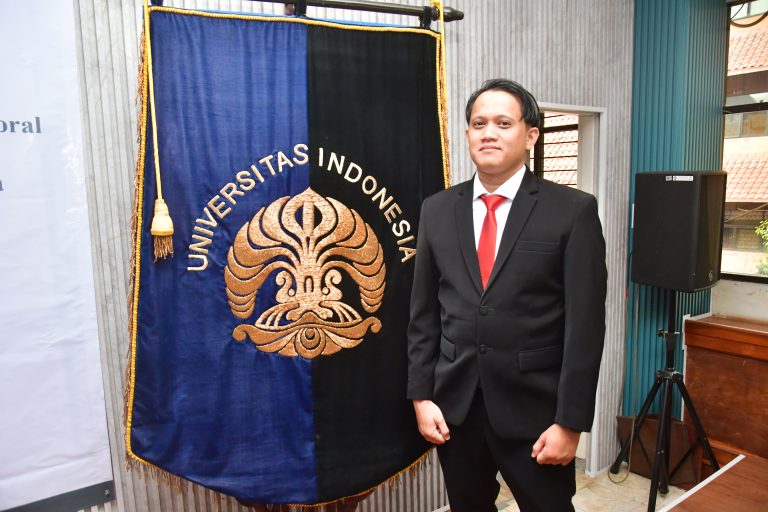
Depok, July 9, 2026 — Amid the growing demand for energy-efficient and environmentally friendly electronic devices, researchers from the Faculty of Mathematics and Natural Sciences, Universitas Indonesia (FMIPA UI) have developed a new material with the potential to replace lead (Pb)-based electronic components. The material is designed to provide better electrical energy storage, reduce energy loss, and offer a more environmentally sustainable alternative.
The innovation was developed by Septian Rahmat Adnan through research combining three different materials: a lightweight and flexible polymer, a ceramic with a high capacity for storing electrical charge, and a mineral widely used in biomaterials. These materials were integrated into a new composite material designed for electrical energy storage components (capacitors) used in a wide range of electronic devices.
Capacitors are essential electronic components that store and rapidly release electrical energy. They are used in virtually all electronic devices, including mobile phones, computers, medical equipment, electric vehicles, and renewable energy generation and storage systems. As global electricity demand continues to grow, so does the need for more efficient, durable, and environmentally friendly capacitors.
To date, the electronics industry has relied heavily on lead-based materials because of their excellent performance. However, the use of lead (Pb) poses significant environmental and health risks, prompting many countries to impose restrictions on its use. These concerns have driven researchers to develop environmentally friendly alternative materials that can deliver comparable performance.
“This research aims to develop a material capable of storing more electrical energy while minimizing energy loss. We hope it can serve as an environmentally friendly alternative to conventional lead-based materials,” said Septian.
In his research, Septian developed a novel material through a series of mixing, thin-film fabrication, and heat-treatment processes. The resulting material was then characterized to evaluate its structure, composition, electrical energy storage capability, energy-loss characteristics, and optimal performance under high-voltage conditions.
The study demonstrated that an optimized material composition can significantly enhance energy storage capacity while minimizing energy loss during capacitor operation. These findings open new opportunities for the development of more efficient, energy-saving, and lead-free electronic components, supporting the advancement of a wide range of future technologies.
Beyond producing a new material, this research also introduces a fabrication method that has not been widely applied in the development of capacitor materials. This approach is expected to serve as a foundation for further studies aimed at developing electronic components with improved performance.
“We hope this research can serve as a foundation for developing materials for the next generation of high-performance electronic components that are environmentally friendly, cost-effective, and capable of supporting the demands of modern technology,” said Septian.
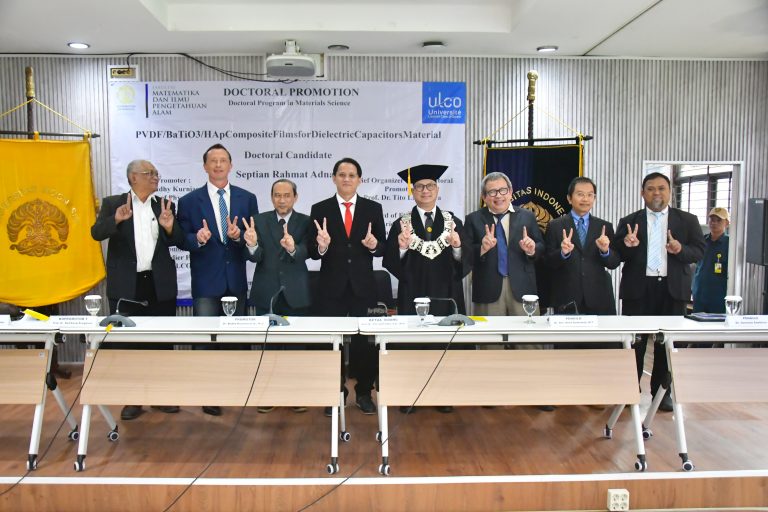
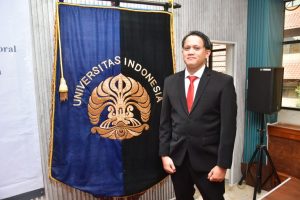
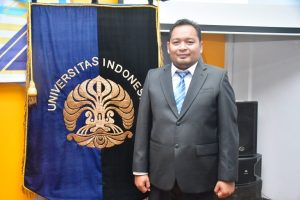
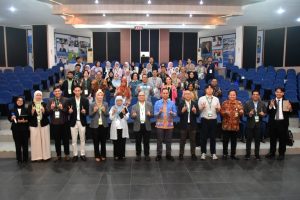
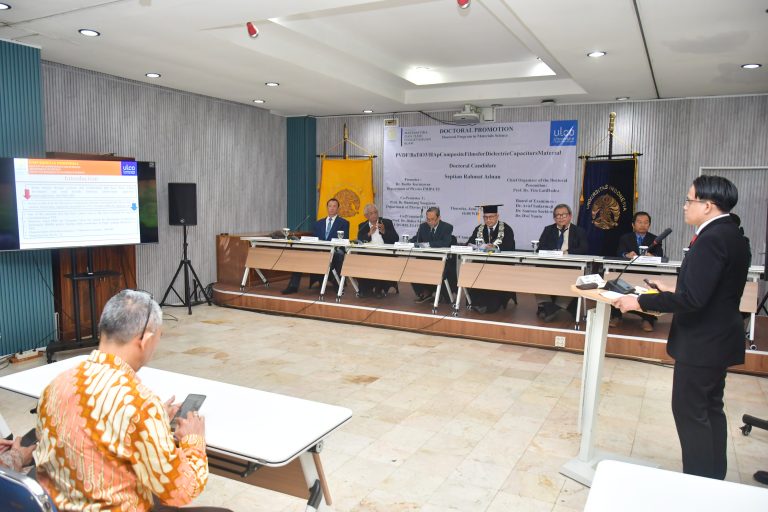
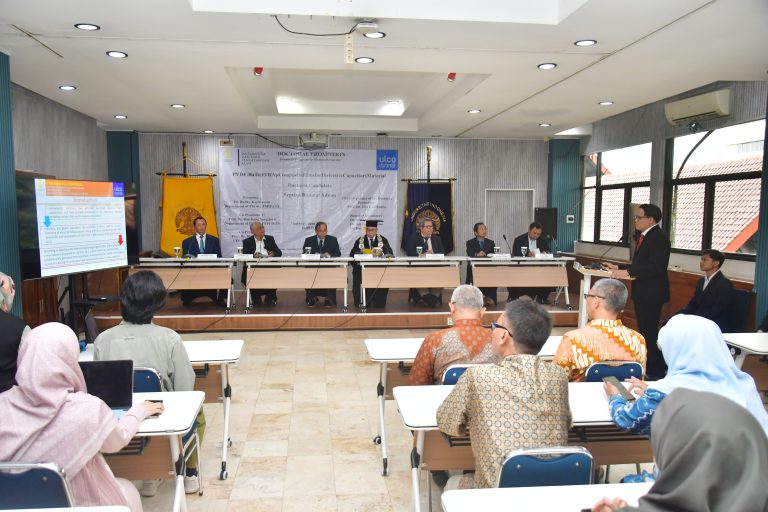
The research was defended by Septian during the doctoral promotion examination for the Materials Science Study Program, FMIPA UI, held at the Main Seminar Room of the Department of Physics, FMIPA UI, Depok, on Thursday (June 25, 2026). Through his dissertation entitled “PVDF/BaTiO₃/HAp Composite Films for Dielectric Capacitors Material,” he earned a Doctoral degree with cum laude honors, completing his studies in eight semesters with a cumulative GPA of 3.81.
The doctoral promotion examination was chaired by Prof. Dr. Tito Latif Indra, M.Si., Dean of FMIPA UI. The research was supervised by Dr. Budhy Kurniawan from the Department of Physics, FMIPA UI, as the Promotor, with Prof. Dr. Bambang Soegijono from the Department of Physics, FMIPA UI, and Prof. Dr. Didier Fasquelle from the Unité de Dynamique et Structure des Matériaux Moléculaires (UDSMM), Université du Littoral Côte d’Opale (ULCO), France, serving as Co-promotors.