|


|
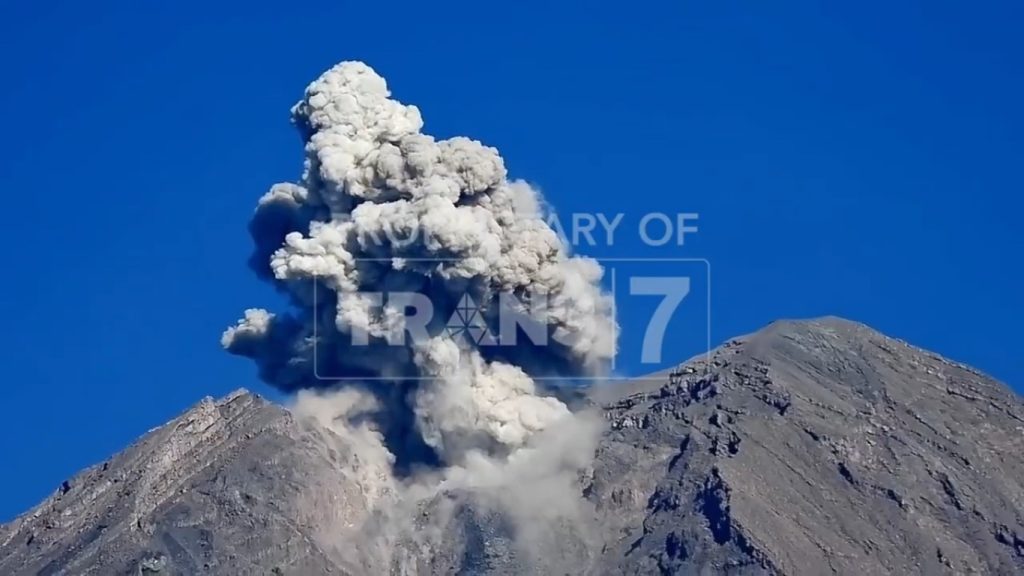
Depok, September 17, 2026 — Mount Anak Krakatau has once again drawn attention following an eruption in early September 2026. Volcanology expert from the Faculty of Mathematics and Natural Sciences, Universitas Indonesia (FMIPA UI), Asri Oktavioni Indraswari, S.T., M.Sc., D.Phil., explained that Anak Krakatau is currently in a phase of rebuilding the volcanic material lost in the landslide during the 2018 eruption.
Asri explained that Anak Krakatau, which first emerged in 1929, underwent a gradual process of volcanic edifice formation until the 2018 eruption triggered a landslide of volcanic material into the sea, causing the Sunda Strait tsunami.
“After the landslide and the resulting tsunami, the volcano lost part of its material. It is now rebuilding the material that was lost during the landslide,” said Asri on the KEPO program on TRANS7.
According to her, this condition means that the potential for a tsunami similar to the 2018 event cannot simply be equated with the current state of Anak Krakatau. The material that previously collapsed into the sea has been lost, making the likelihood of a tsunami occurring through a similar mechanism relatively low at present.
Nevertheless, Asri emphasized that volcanic activity remains difficult to predict with certainty. An eruption can occur again after a volcano has entered a relatively quiet period.
“It does not mean that because the volcano is currently quiet, there will be no further activity. There is still a possibility that it could become active again,” she said.

She said that monitoring of Anak Krakatau’s activity is currently supported by a better monitoring system than was available before the 2018 eruption. Real-time monitoring systems enable changes in volcanic activity to be detected more quickly.
Asri also addressed claims circulating on social media about a “giant magma pipe” connecting several volcanoes in Indonesia, following reports that six volcanoes erupted on the same day, September 6, 2026.
She explained that, geologically, the magma systems of these volcanoes are generally isolated because they are located far apart. The fact that they erupted around the same time does not necessarily indicate a direct connection beneath the surface.
“In geological terms, these systems are generally isolated. Most likely, each volcano has its own independent magma system,” said Asri.
According to Asri, the activity of several volcanoes occurring within a relatively short period is better understood as events that can coincide due to probability, rather than as the result of a single giant magma system connecting all of these volcanoes.
She added that volcanic activity actually occurs every day, although its intensity varies. Eruptions that occur closer to populated areas or are larger in scale tend to be more noticeable and attract greater public attention, which can lead to the perception that the activity of these volcanoes is interconnected.
“The attention just happened to coincide with the activity at Krakatau, so the events were more readily perceived as being connected,” she added.
Asri said that increasingly advanced monitoring systems are an important factor in addressing the dynamics of volcanoes in Indonesia. Monitoring data can be used to identify changes in volcanic activity, although it cannot provide absolute certainty about what may happen in the future.