|

|
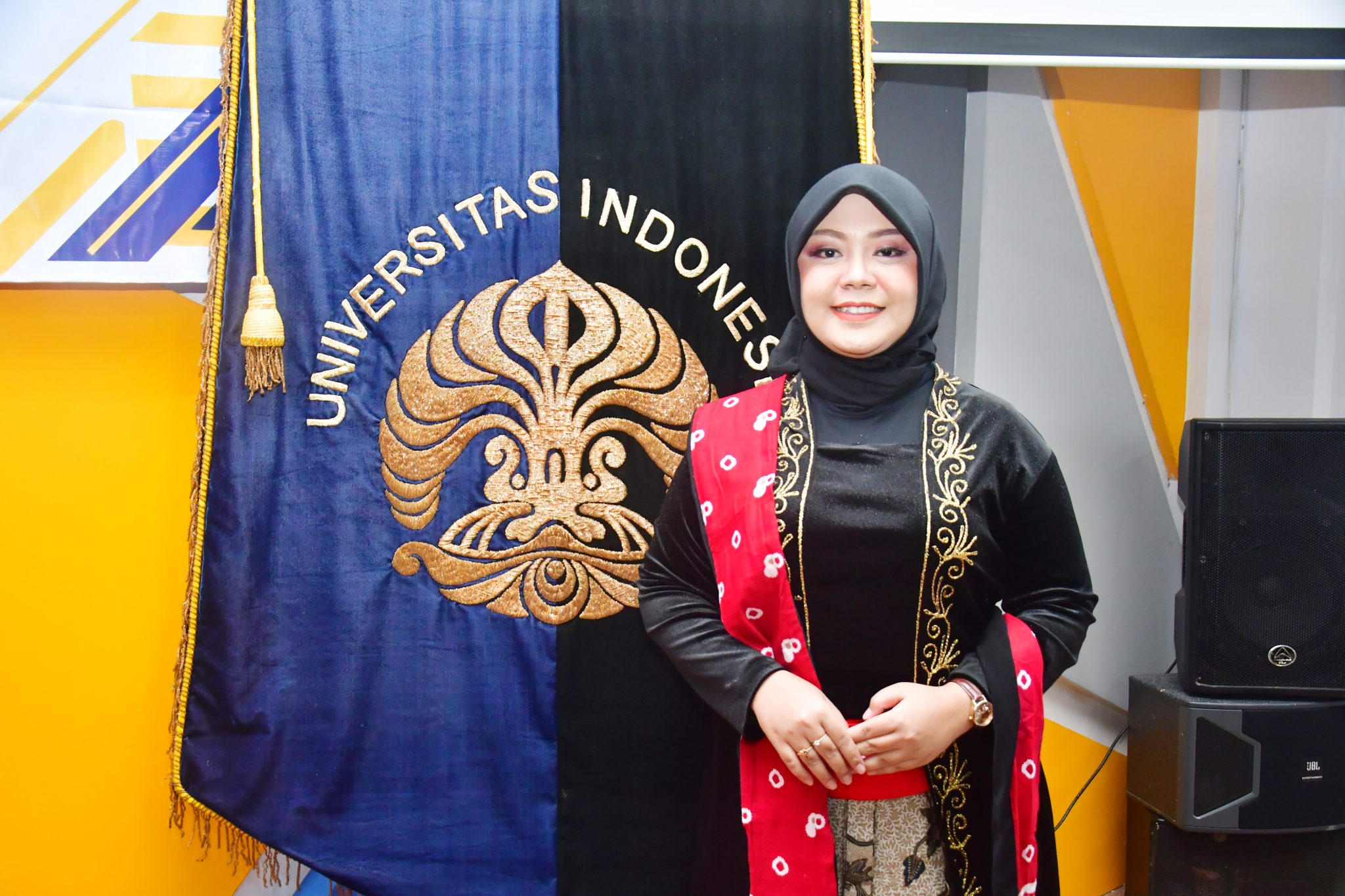
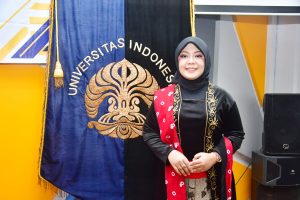
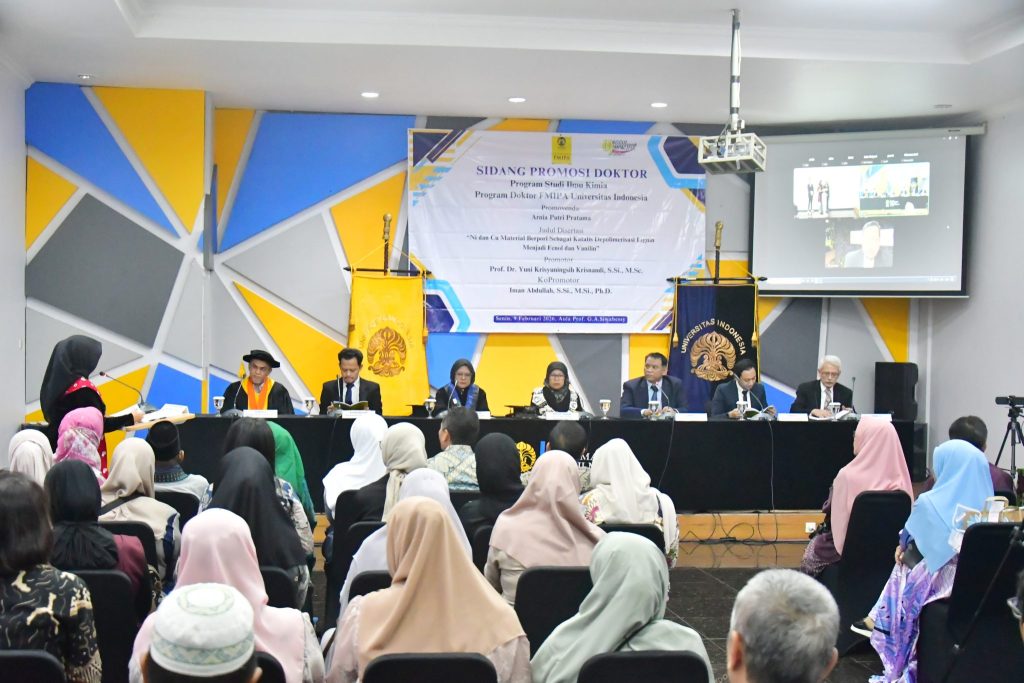
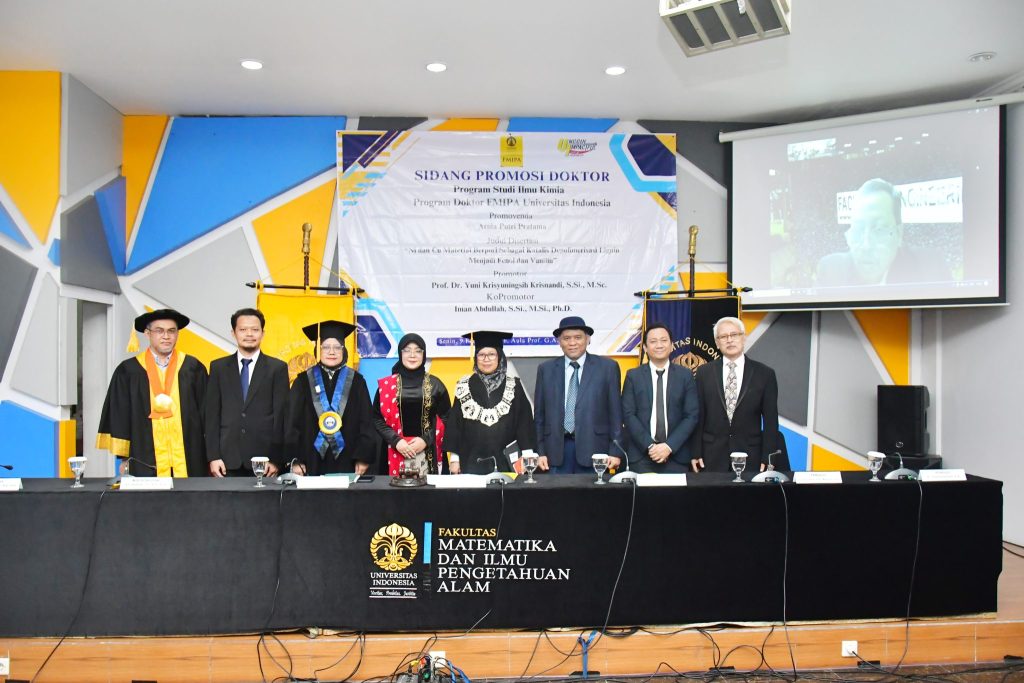
Arnia Putri Pratama has officially earned her Doctorate in Chemistry from the Faculty of Mathematics and Natural Sciences (FMIPA) at Universitas Indonesia after successfully defending her dissertation in an Open Doctoral Promotion Session held on Monday (9/2/2026) at the Aula Prof. Dr. G.A. Siwabessy, FMIPA UI, Depok. Under the supervision of Yuni Krisyuningsih Krisnandi and Co-Supervisor Iman Abdullah, Arnia presented an innovative research project offering solutions to two major global challenges today: the energy crisis and environmental degradation.
In her research, Arnia Putri Pratama explored ways to utilize wood waste and convert it into high-value chemical products. To date, the world remains heavily dependent on fossil fuels, whose reserves continue to decline and which have significant negative impacts on the environment. In fact, Indonesia possesses abundant biomass resources, including wood waste that has yet to be optimally utilized.
One of the main components of wood is lignin. For many years, this substance has tended to be treated as waste in the wood processing industry. In fact, lignin holds great potential to be converted into important compounds such as phenol and vanillin. Phenol is widely used as a raw material for plastics, adhesives, and various industrial products. Meanwhile, vanillin is widely known as the most commonly used flavoring agent in the world and also serves as a precursor in the production of environmentally friendly materials.
Arnia Putri Pratama used lignin derived from mahogany wood, which is widely available in Indonesia and often remains as a by-product of the wood industry. “I see wood waste, especially mahogany, as an opportunity. Rather than being discarded or simply burned, it is better to transform it into products with high economic value,” Arnia stated in her presentation.
To convert lignin into simpler and more valuable compounds, Arnia Putri Pratama developed catalysts made from nickel (Ni) and copper (Cu) as reaction accelerators. These catalysts were prepared using specially designed porous materials, allowing the lignin depolymerization process to occur more effectively. She also compared several types of catalysts to determine which formulation was the most optimal in producing phenol and vanillin.
The results showed that nickel-based catalysts performed more effectively than copper in breaking down lignin. Meanwhile, certain metal combinations on specific support materials were able to significantly enhance phenol production yields. “We found that the structure and properties of the catalyst greatly determine the final outcome. With the right design, the process can become more efficient and produce higher yields,” she explained.
According to Arnia Putri Pratama, the biggest challenge in lignin processing so far has been the low product yield and the limited stability of catalysts at high temperatures. Her research sought to address these issues by designing a catalyst system that is more stable and selective. She also tested the reaction using model compounds to gain a more detailed understanding of how the lignin depolymerization process occurs.
This research is considered novel because it integrates the use of native lignin derived directly from biomass with model compounds, while also comparing two different catalyst systems within a single comprehensive approach. Through this method, the relationship between catalyst design and reaction outcomes can be understood more clearly.
Arnia Putri Pratama hopes that her findings will encourage more serious utilization of Indonesia’s biomass resources. “Indonesia is rich in natural resources. With the right technology, even waste can be transformed into industrial raw materials that are more environmentally friendly and sustainable,” she stated.
Through this dissertation, Arnia Putri Pratama not only earned her doctoral degree from the Faculty of Mathematics and Natural Sciences (FMIPA) at Universitas Indonesia, but also opened new opportunities for the development of a renewable resource–based chemical industry. Wood waste, which has long been overlooked, now holds the potential to become an important raw material for food flavorings, eco-friendly plastics, and various other high-value industrial products.