|


|
Natural disasters are events that can threaten human safety at any time, and have an impact on environmental damage. Natural disasters such as earthquakes, volcanic eruptions, landslides, and tsunamis can occur in all parts of the world. Disasters cannot be avoided, but efforts can be made to reduce the risk.
Disaster risk can be minimized by increasing the understanding of disaster mitigation through creative prevention education. Disaster education is one of the internal solutions among the community to reduce the impact of disasters, as well as building a culture of responsiveness and alertness in the community to disasters that occur.
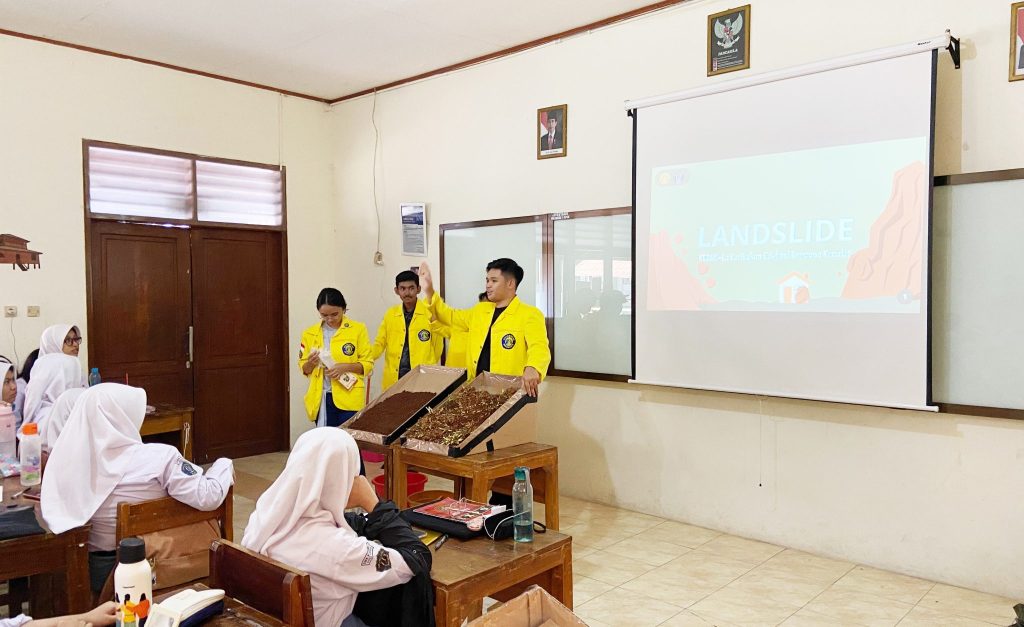
Creative education to improve understanding and knowledge about disaster mitigation has also become an urgency for the Faculty of Mathematics and Natural Sciences, University of Indonesia (FMIPA UI) to develop a creative disaster curriculum innovation entitled KECAK, namely the Creative Disaster Education Curriculum in various series, one of which is KECAK-L for the landslide disaster series, through the Environmental Geology and Disaster course.
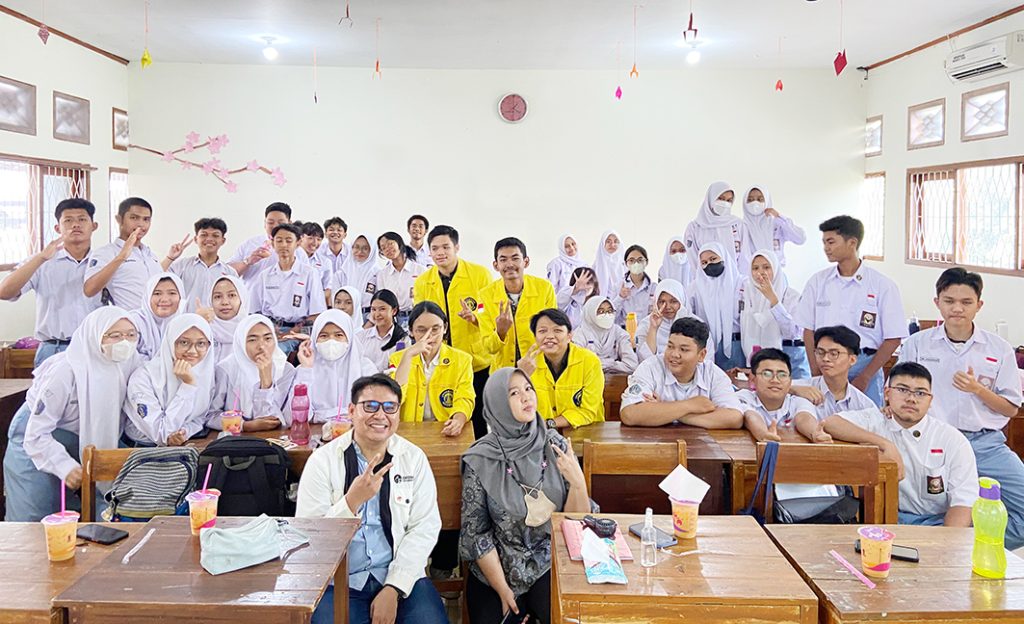
In line with this, the Geology Study Program (Prodi) team from FMIPA UI consisting of lecturers and students held a community service activity, by presenting the KECAK-L (Creative Disaster Curriculum Landslide Series) innovation at SMA Negeri 1 Depok, West Java, on August 8 and 15, 2023. There, the team provided a learning experience that was not only educational and innovative, but also interesting and creative, in a simulation of the potential risk of landslides.
This activity program, chaired by Twin Hosea W. Kristyanto, M.T., is a simulation method that focuses on showing landslide disaster events that may occur in the future.
"We think that the mastery of disaster mitigation skills based on creative education among students is very important, in addition to understanding the material about the disaster itself. With the disaster knowledge they have, it is hoped that psychological conditions such as anxiety and fear in themselves can be controlled when a disaster occurs," said Twin.
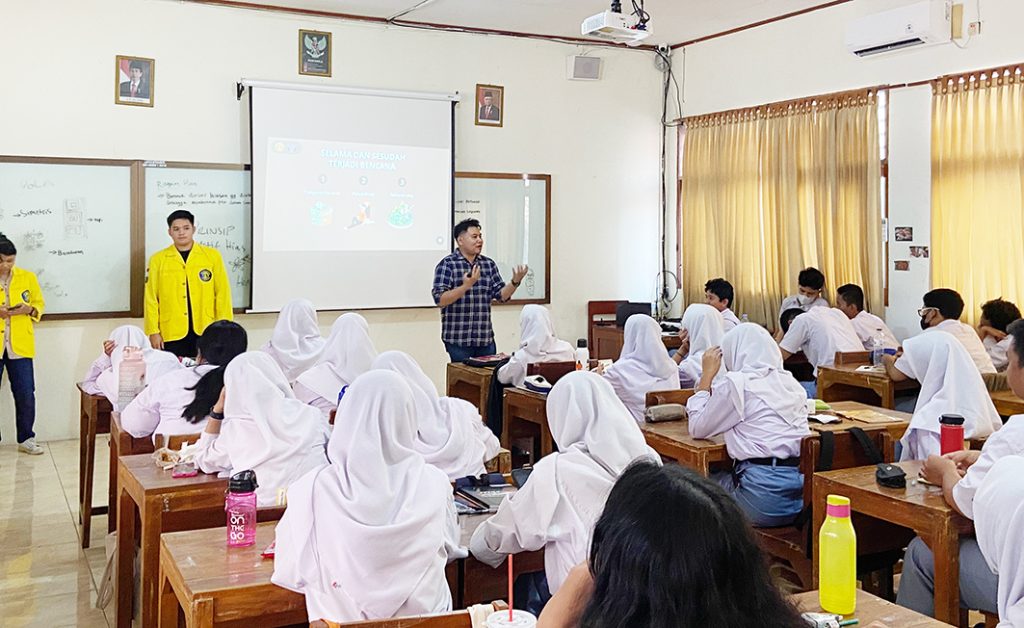
Twin and the FMIPA UI team demonstrated KECAK-L by providing illustrations and simulations. role playing or role play. Twin said that through this creative learning model, the teaching method becomes more interesting and easier for participants to understand.
"The teaching method becomes more creative, making participants more skilled in adapting the material provided by the team to the current situation," he said.
He continued, mitigation steps do not only focus on disaster management, but also on deepening the understanding of participants. The goal is for participants to be more alert and responsive in responding to disasters during and after a disaster occurs.
The KECAK-L activity was carried out twice, especially for students in grades XI IPA and XI IPS. The activity began with sharing landslide-related material to participants. However, before the delivery of the material, participants underwent pre-test to measure their initial understanding. The activity continued with a landslide simulation, in this session students were actively involved in making teaching aids together with the team.
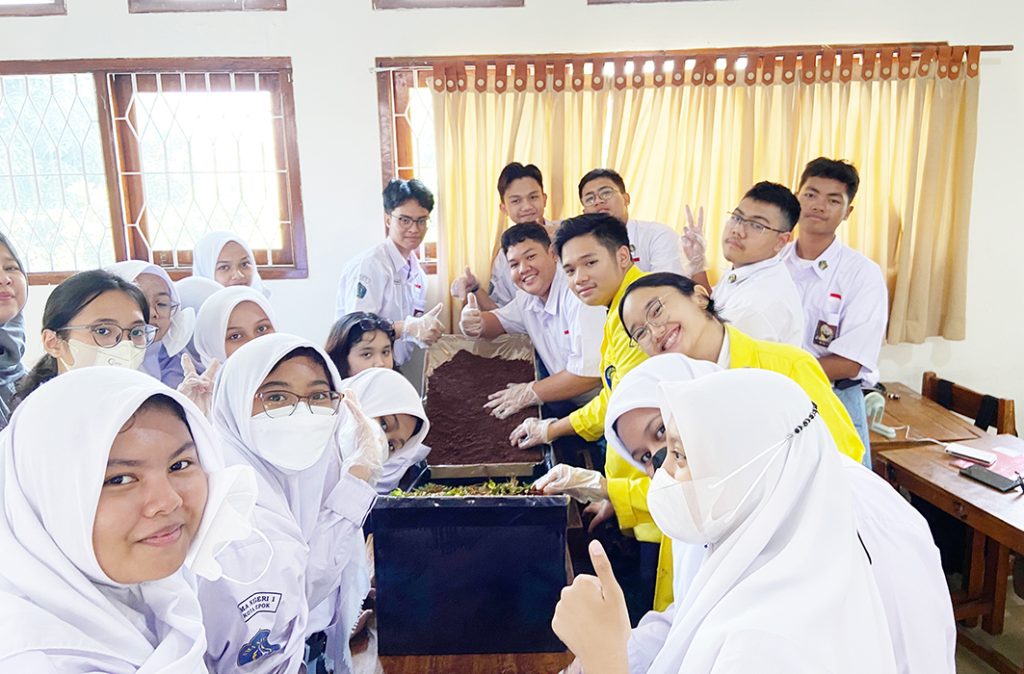
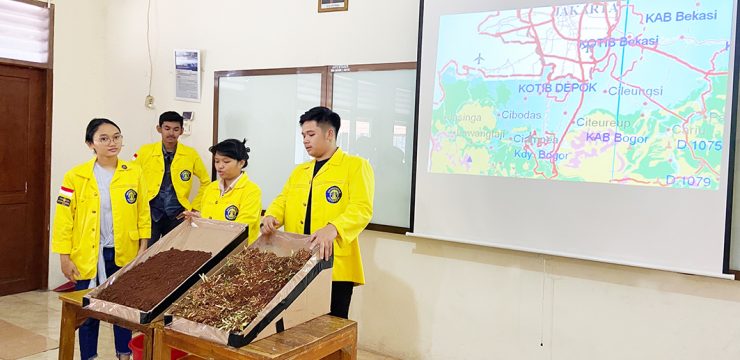
The props are made of cardboard shaped like a slope with a steep slope. Then on top of the artificial slope, soil is placed in two conditions, namely conditions without vegetation and conditions with plants or grass on it. Then, the cardboard slope, with two different scenarios, is watered with water as a simulation of rainwater. The purpose of this demonstration is to show that by keeping the slope cover green with plants, it can prevent landslides.
After the activity, the team conducted a post-test to measure the increase in participants' understanding of all the materials that the team had provided. The results of the post-test proved quite positive, showing an increase in students' understanding of landslide risks.
Twin hopes that KECAK-L will become a real example of how disaster education can be interesting and effective, as well as a solution for SMAN 1 Depok to the problems faced, namely increasing the capacity of students in dealing with disasters.
He also hopes that the benefits of this activity can have a wider impact, namely the formation of community groups that are able to adapt to the environment in disaster-prone areas.
News source : https://sci.ui.ac.id/