|


|
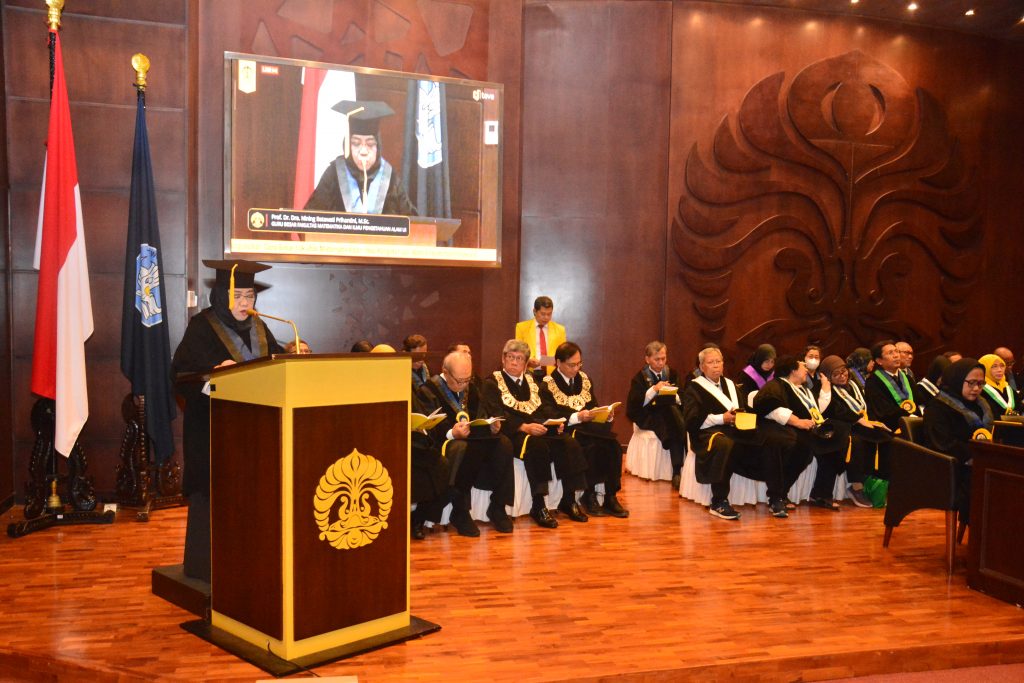
Indonesia is one of the megabiodiversity countries that has various types of flora and fauna. Unfortunately, the diversity of native/indigenous microalgae in Indonesia is not widely known. Studies on the biodiversity of microalgae, including Cyanobacteria, are still limited to research on the structure of microalgae communities in Indonesian waters.
Prof. Dr. Dra. Nining Betawati Prihantini, M.Sc. from the Faculty of Mathematics and Natural Sciences (FMIPA), University of Indonesia (UI), was interested in observing microalgae in Indonesian waters, including in the UI area. The microalgae he found were then identified and isolated to study their benefits. Several microalgae that were successfully isolated were strains of Stanieria, Leptolyngbya, and Synecochoccus. These strains can be used as raw materials for biofuel.
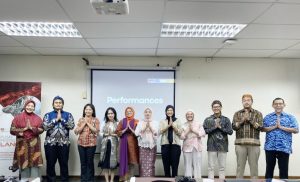
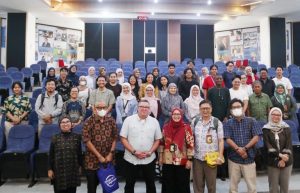
He conveyed information about the microalgae in his inaugural speech as a Permanent Professor in the Field of Systematics and Utilization of Microalgae, FMIPA UI, on Wednesday (25/10), at the UI Campus Depok Convention Hall. The inauguration procession was led by the Chairperson of the UI Board of Professors, Prof. Harkristuti Harkrisnowo, S.H., M.A., Ph.D., and attended by Professors from the National Research and Innovation Agency (BRIN), Prof. Dr. Puspita Lisdiyanti, M.Agr., Chem.
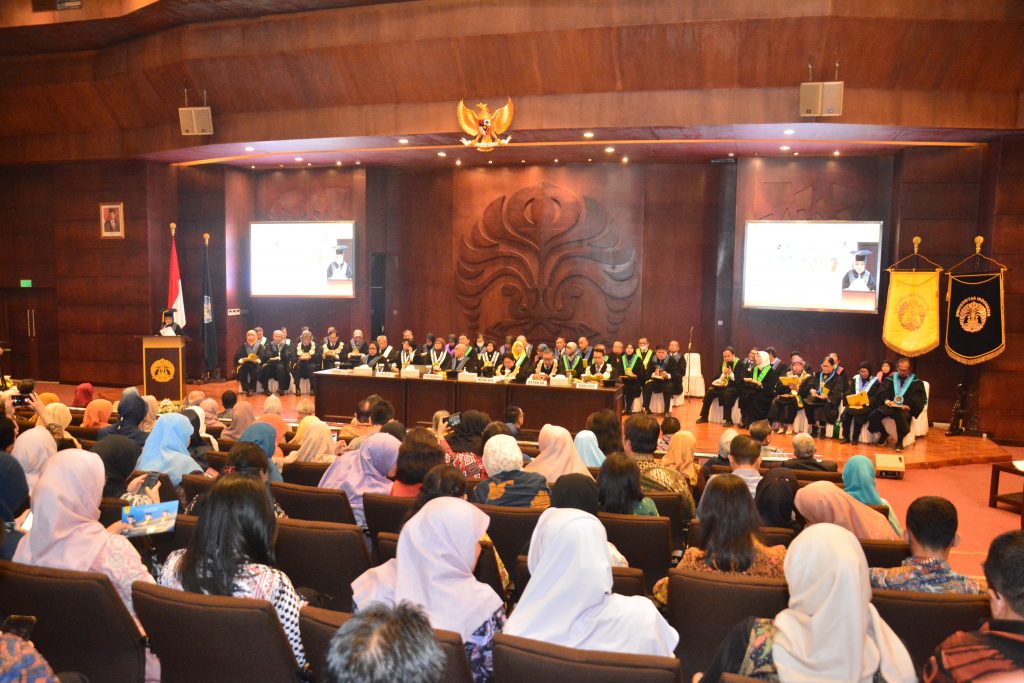
In her scientific oration entitled "Exploration and Research of Indigenous Indonesian Microalgae in Systematic Studies, Biodiversity, Utilization, and Conservation Efforts", Prof. Nining highlighted the importance of exploration and research on microalgae to find out the biodiversity of microalgae.
In the UI area, she said, there are also endangered microalgae, namely Chara. This type of microalgae is known to be susceptible to environmental changes, so it is often found in clean and pollutant-free waters. Chara was found in the Natural Laboratory, namely a spring near FMIPA UI. The waters of the Natural Laboratory are pools of water that are still clean from environmental pollution. To support the sustainability of Chara, conservation efforts are carried out in two ways. First, conservation outside its habitat (ex situ) through culturing in the Algae Culture Room of the Department of Biology, FMIPA UI—the location for the development of the UI Microalgae Culture Collection (UIMCC). Second, preservation of Chara in its natural habitat. The initial stage that must be considered in microalgae conservation is the creation of the right growth medium.
Prof. Nining added that in utilizing microalgae, the characteristics of microalgae need to be known so that their utilization is maximized. She said, "Microalgae that will be utilized need to be propagated through a culturing process. The propagation of culture (biomass) is highly dependent on the
culturing container and the system used. One of the commonly used systems is a photobioreactor to produce biomass in large quantities."
The photobioreactor system is designed to provide supporting factors for microalgae growth. Chlorella DPK-01 has been grown in a tubular photobioreactor. Meanwhile, Synechococcus HS-9, Leptolyngbya HS-16, and Mastigocladus HS-46 (Cyanobacteria) have been cultivated in tubular and flat photobioreactors. The microalgae are grown for biomass production as a raw material for biofuel.
After the biomass production process, the next procedure is harvesting. The harvesting method using ultrasonic waves called the Ultrasound Harvesting Module (UHM) is designed to increase cost and time efficiency during the harvesting process. The obtained microalgae biomass can be processed into lipids for biofuel raw materials and into protein for food raw materials.
"Indonesian microalgae research is carried out in line with other research, such as waste water treatment, carbon capture, and ex situ conservation efforts of native Indonesian microalgae. Correct identification of algae species can be applied in the field of biotechnology, for example for food sources, medicines, cosmetics, and biofuels. An understanding of taxonomy and systematics is needed so that the microalgae studied can be utilized optimally," said Prof. Nining.
Prof. Nining's research on microalgae is one of the studies conducted previously. Some of them are The Characteristics of Diatom in Different Preservation Methods: A Comparation Study (2023); Biomass Production of Subang Isolated Scenedesmus in Tubeshaped Photobioreactor with the Exposure of Audible Sound (Music): Photobioreactor Improvement Strategy (2023); and The Role of Indonesian Indigenous Cyanobacteria Culture Collection as An Ex-situ Conservation
Prof. Dr. Dra. Nining Betawati Prihantini, M.Sc. graduated from the Department of Biology, Faculty of Exact and Natural Sciences, University of Indonesia in 1987; completed her Masters degree in the Program of Biosystem Studies, University of Tsukuba, Japan in 1998; and obtained her doctorate from the Department of Biology, FMIPA UI in 2015. Currently, she serves as the Head of the Microbial Systematics and Prospecting (MSP) Research Group, Department of Biology, FMIPA UI.
News source : https://sci.ui.ac.id/