|

|

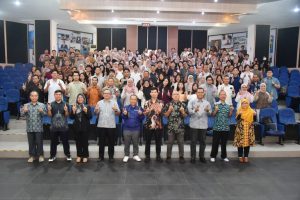
Prof. Dra. Wellyzar Sjamsuridzal, M.Sc., Ph.D., was officially inaugurated as a permanent professor at the Faculty of Mathematics and Natural Sciences (FMIPA), Universitas Indonesia (UI), in the field of Microorganism Systematics and Prospecting. The inauguration was conducted by the Rector of UI, Prof. Ari Kuncoro, S.E., M.A., Ph.D., on Wednesday (November 13) at the UI Campus Convention Hall in Depok.
In her inauguration speech, Prof. Wellyzar delivered an address titled “Unveiling the Secrets of the Microorganism World Through Biosystematics.” In her speech, she explained that microorganisms are extremely small organisms, ranging in size from 0.1 to 10 micrometers, and can only be seen under a microscope. Microorganisms exhibit diversity in shape, size, structure, and reproductive methods, and they play a vital role in ecosystems and in everyday human life.

On the Earth's surface, which consists of 29.2% land and 70.8% water, not many people realize that 90% of the biomass in aquatic environments is made up of microorganisms. Nearly all respiration processes (98%) in the ocean are carried out by microorganisms. Microorganisms such as bacteria and archaea play a key role in marine respiration, especially in the decomposition of organic matter.
Despite this, only about 1% of the estimated number of microorganism species on Earth has been identified so far, even though microorganisms make up the largest component of Earth's biodiversity. This is why uncovering the diversity of microorganisms and their roles in the environment, as well as their potential applications in biotechnology, is of great importance.
To uncover these aspects, the science of microbial biosystematics is needed. It focuses on the identification, classification, and understanding of evolutionary relationships among various types of microorganisms, including bacteria, archaea, fungi, algae, and viruses. This field integrates morphological, physiological, genetic, and biochemical approaches to organize and document the diversity of microorganisms in nature.
“The integration of biosystematics with genomic approaches today not only deepens our understanding of microorganisms and their roles in ecosystems but also opens up new opportunities for innovation in various fields, including health, agriculture, food, environment, and biotechnology. The research produced can accelerate the discovery of solutions to national and global challenges we face today,” said Prof. Wellyzar.
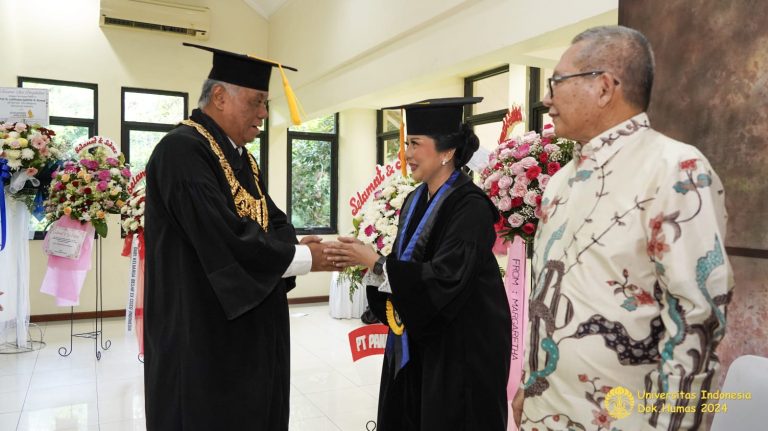
On that occasion, Prof. Wellyzar presented the results of her research in applying biosystematics to uncover the mysteries of microorganisms in Indonesia. She and her team have demonstrated that the forest in the Cisolok geothermal area is a strategic habitat for discovering various new taxa of microorganisms. This area is a biodiversity hotspot for rare Actinobacteria and the phylum Chloroflexota. The exploration of thermophilic bacteria in geysers and hot springs in Indonesia has been reported since 1991.
Research on the exploration and application of thermophilic bacteria continues to grow. Long-term monitoring and conservation of natural hot spring ecosystems have become increasingly important and require attention, particularly in the context of commercial applications. Although some studies are based on industrial applications, there is still very little evidence of progress reaching the commercial scale. “Therefore, it is crucial for stakeholders to bridge the gaps in the downstreaming process of research products so they can successfully reach the communities in need,” said Prof. Wellyzar.
She added that it is necessary to develop a dedicated database for the genomic big data of tropical microorganisms in Indonesia, along with information related to their Biosynthetic Gene Clusters (BGCs). This data contributes to enhancing the understanding of the diversity and evolution of tropical microorganisms in Indonesia, as well as their roles in the environment.
In addition, she also stated that the role of microorganism culture collections in Indonesia needs to be strengthened in preserving, providing, and promoting the utilization of microbial genetic resources that are scientifically significant and industrially useful, both in Indonesia and globally. Membership in regional and global networks grants culture collections recognition and visibility within the international scientific community.
“This recognition can enhance the reputation and credibility of culture collections, attract collaborations, partnerships, and funding opportunities from national and international organizations. These collaborative efforts will lead to significant advancements in various fields such as medicine, agriculture, and biotechnology in Indonesia,” said Prof. Wellyzar.

To this day, Prof. Wellyzar remains actively engaged in various research endeavors, which have been published in both national and international journals. Some of her notable works include "What Species Is That? Answering the First Question of True Nature Enthusiasts" (2024); "Dictyobacter halimunensis sp. nov., a new member of the phylum Chloroflexota, from forest soil in a geothermal area" (2024); "Identification and screening of enzymatic abilities of Ktedonobacteria from forest soil of Cisolok Geothermal Area, Indonesia" (2022); and "The effect of the use of commercial tempeh starter on the diversity of Rhizopus tempeh in Indonesia" (2021).
Prof. Wellyzar earned her Bachelor's degree in Biology from FMIPA UI in 1991. In 1998, she completed her Master’s program at the Department of Biotechnology, Graduate School of Agricultural and Life Sciences, Tokyo University, Tokyo, Japan. At the same university, she went on to obtain her Doctor of Philosophy (Ph.D.) degree in 2001.
Attending the inauguration ceremony were Dr. Rasio Ridho Sani, Director General of Law Enforcement for Environment and Forestry at the Ministry of Environment and Forestry (KLHK); Prof. Ir. Donny Widiyanto, Ph.D., Professor at the Department of Agricultural Microbiology, Faculty of Agriculture, Gadjah Mada University (UGM); Prof. Dr. Retno Wahyuningsih, MS, Ph.D., Professor at the Department of Parasitology, Faculty of Medicine, UKI Jakarta; Dr. R. Hendrian, M.Sc., Deputy for Research and Innovation Utilization at BRIN; Onasis Wahju, Director of PT Cheil Jedang Indonesia; H. Drs. Aryono Bambang Ardhyo, MM., President Director of PT Kievit Indonesia; the Director of PT Embrio Biotekindo; Dr. Ir. Wida Winarno, M.Si., Co-founder of the Indonesian Tempe Movement; and Prof. Dr. Indrawati Gandjar, Emeritus Professor of FMIPA UI.
Source : https://sci.ui.ac.id/