|

The Department of Biology
Faculty of Mathematics and Natural Sciences Universitas Indonesia

The Dewa fish is a native freshwater fish with the Latin name Tor soro, is a freshwater fish from the family Cyprinidae found in Indonesia. Species T. soro known as kancra fish in Sumedang and Kuningan (West Java), while in North Sumatra it is called batak fish. Batak fish is used as a requirement in traditional ceremonies such as marriage and childbirth. In Kuningan, West Java, kancra fish is better known as a sacred fish because it is considered a fish that brings disaster if the general public catches or eats it.
Unfortunately, the existence of T. soro in nature has begun to decline due to habitat degradation, and different gonad maturity times between males and females. In addition, excessive fishing and other factors such as water pollution have threatened the population. T. soro. Upaya budidaya T. soro It has been done, but the availability of seeds is still an obstacle.
These facts underlie Suci Lestari, a permanent lecturer in the Biology Education Study Program at the University of Muhammadiyah Prof. Dr. Hamka (UHAMKA) to conduct research to obtain a doctoral degree in the Biology Postgraduate Study Program, Faculty of Mathematics and Natural Sciences (FMIPA UI).
In her doctoral studies, Suci conducted research on honey which is considered to have strong antioxidant abilities as a protectant in the process of preserving genetic material in the form of sperm. The research activities were carried out at the Freshwater Fisheries Plasma Nutfah Research Installation, Cijeruk, West Java, where fish sperm samples were taken. Tor soro dan proses fertilisasi.
Through his dissertation entitled HONEY AS AN ANTIOXIDE AGENTN IN SPERMATOZOA GOD FISH (Tor soro) POST-RESERVATION 48 HOURS, Suci explained that this research was conducted as a development of genetic studies to be applied in efforts to preserve the nearly extinct sacred fish.
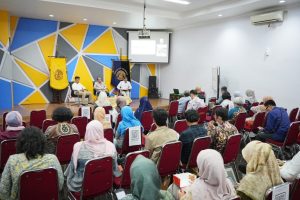
"The main objective of this research in general is to evaluate honey as an antioxidant agent in terms of its potential as a protector in the process of preserving genetic material in the form of sperm," said Suci in her presentation at the Doctoral Promotion Session of the Postgraduate Biology Study Program, FMIPA UI, Thursday, December 29, 2022, at the UI Campus, Depok.
The development of cold storage techniques (cold storage) and cryopreservation have brought about important changes in animal reproductive biotechnology. The preservation techniques used in aquaculture are short-term storage (cold-storage) and cryopreservation of spermatozoa. However, cryopreservation techniques are difficult to perform in some species due to poor semen quality and intrinsic properties, so cold storage (cold-storage) is a feasible, inexpensive, and simple procedure to perform.
The development of a cold storage protocol for fish spermatozoa makes it possible to solve the problem of asynchrony between sexually mature males and females, and can also reduce the costs required for broodstock maintenance and artificial fertilization.
"In general, spermatozoa contain high mycotondrial but have low cytoplasm and antioxidant concentrations. This makes spermatozoa very susceptible to damage from free radicals after storage," Suci said in front of the testing team.
“Therefore, antioxidants become an important factor in fighting oxidative stress induced by free radicals due to the increase in Reactive Oxygen Species. Oxidative stress is one of the effects caused by the preservation process," he said.
Meanwhile, the selection of honey as an antioxidant is based on its content. phenolic compounds which has the potential as a strong anti-oxidative agent. Several studies that have been conducted in order to find a protectant or protector in the process of storing spermatozoa in the form of a combination of 0.1% honey solution and 10% methanol showed the highest percentage of motility (89.4 ± 5.45%), viability (85.75 ± 4.79%), and fertilization percentage (98.55 ± 1.69%).
Furthermore, Suci, who focuses her research in the field of animal biopreservation, hopes that the results of her research can contribute to the development of biological science, including the field of reproductive technology. cryobanking, and genetics. In addition, the research results can be used to enrich the teaching and learning content in biology education in the courses of cell and molecular biology, conservation biotechnology; and genetics.
Suci's success in pursuing education and research in the doctoral study program at FMIPA UI, cannot be separated from the guidance of Prof. Dr. Drs. Abinawanto, M.Sc. (Professor of Biology, FMIPA UI) as the promoter and Anom Bowolaksono, Ph.D. (Lecturer & Researcher in Biology, FMIPA UI), and Prof. Dr. Ir. Rudhy Gustiano, M. Sc. (Main Expert Researcher, Center for Biosystematics and Evolution Research, National Research and Innovation Agency (BRIN)) as Co-Promoter.
News source : https://sci.ui.ac.id/