|

|

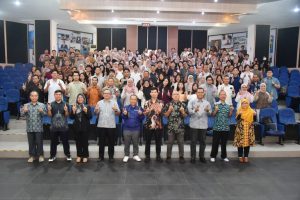
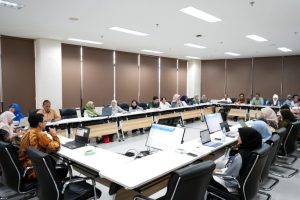
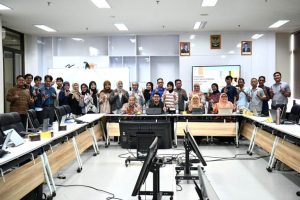
The Faculty of Mathematics and Natural Sciences (FMIPA) of the University of Indonesia (UI) awarded a Doctoral degree to Lepa Syahrani, from the Biology Study Program through the Open Doctoral Promotion Session held on Friday (05/16/2025), at the Prof. Dr. G.A. Siwabessy Hall, FMIPA UI, Depok. Lepa successfully earned a doctoral degree with cum laude predicate, and a perfect Cumulative Achievement Index (IPK) of 4.00.
In his dissertation entitled "Allele Detection and Mechanism of Mosquito Resistance Anopheles sp. "Main Vectors of Malaria Against Insecticides Permethrin (Pyrethroid) and Bendiocarb (Carbamate) in Indonesia", Dr. Lepa revealed the serious threat that has emerged due to mosquito resistance to the two main types of insecticides, which have been used to control malaria, especially in endemic areas, such as Papua and East Nusa Tenggara (NTT).

The research was conducted in Keerom Regency, Papua, and West Sumba Regency, and Southwest Sumba, NTT, using bioassay, biochemical, and molecular approaches. Dr. Lepa's findings show that resistance to permethrin insecticide has occurred in Papua and Sumba, while bendiocarb insecticide is still sensitive. The emergence of resistance to permethrin causes the effectiveness of malaria control interventions, such as the use of insecticide-treated bed nets and spraying insecticide residues on walls inside houses to be ineffective.
"This research highlights an urgent issue in malaria control. These findings are an important alarm to update data-based vector control strategies using a molecular approach," said Dr. Lepa in presenting the results of his research to the examination team.
In his research, Dr. Lepa recommends routine monitoring of mosquito vector resistance through phenotype and genotype approaches, not using permethrin insecticide as the active ingredient in insecticide-treated bed nets, IRS, and other vector interventions, and using innovative approaches such as spatial repellents in malaria vector control. He also emphasized the importance of using molecular markers to detect resistance early, which will help in formulating adaptive and evidence-based malaria control strategies.

This open session presented Prof. Anom Bowolaksono, Ph.D. (Department of Biology, FMIPA UI) as the promoter, and Astari Dwiranti, M.Eng., Ph.D. (Department of Biology, FMIPA UI), and Dr. Puji Budi Setia Asih (Eijkman Center for Molecular Biology Research and BRIN) as co-promoters.
Prof. Anom Bowolaksono as the promoter expressed his appreciation for Dr. Lepa's research which was considered very relevant in the context of public health in Indonesia. He emphasized that the resistance of vector mosquitoes to insecticides is one of the main challenges in malaria control programs, especially in endemic areas such as Papua and NTT.
"This research offers a concrete solution to overcome the increasingly worrying problem of insecticide resistance. The molecular and biochemical approaches used provide new insights that are not only scientific, but can also be used as a reference for policy makers, in formulating more effective and sustainable malaria control strategies," said Prof. Anom.
For information, based on data from the Ministry of Health of the Republic of Indonesia in 2024, Papua recorded the highest Annual Parasite Incidence (API) in Indonesia, namely 156.59, followed by Gorontalo and NTT with API 1.3 and 1.25 for areas outside Papua Island. Resistance of vector mosquitoes is a major challenge in efforts to eliminate malaria in Indonesia, which has so far relied on control using insecticides.