|

|

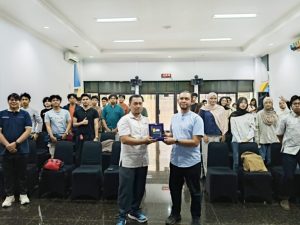
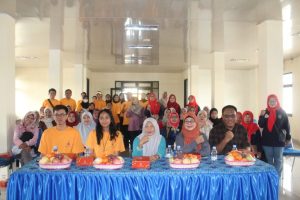
The Faculty of Mathematics and Natural Sciences, University of Indonesia (FMIPA UI) held an open session for the doctoral promotion of the Biology Study Program on Wednesday (14/5), at the Prof. Dr. G.A. Siwabessy Hall, Depok. In the session, the promoter Dr. Yati Maryati, who is a researcher from the Chemical Research Center, National Research and Innovation Agency (BRIN) successfully defended her dissertation entitled “Development of Lozenges Made from Microcrystalline Cellulose Excipient SCOBY with Kombucha Bioactive Ingredients”. Ia dinyatakan lulus dengan predikat cumlaude and achieve Cumulative Achievement Index (GPA) 3,88.
This research focuses on the development of lozenges based on natural and environmentally friendly materials, namely from microcrystalline cellulose (MS) produced from SCOBY (Symbiotic Culture of Bacteria and Yeast) gel layer resulting from kombucha fermentation of various substrates from fruits and vegetables.
"This research was born from concerns about the dependence of the national pharmaceutical industry on imported raw materials, especially excipients based on plant cellulose. We strive to offer a more sustainable local biomass-based solution through the utilization of kombucha fermentation waste," said Dr. Yati in her presentation.
According to Dr. Yati, bacterial cellulose produced by SCOBY has a number of significant advantages compared to conventional cellulose derived from plants. One of the main advantages is the absence of lignin and hemicellulose, two components that are usually found in plant cell walls and must be removed through complex chemical processes.
In addition, bacterial cellulose has higher purity and superior physical properties, such as cohesiveness (good adhesion between particles) and porosity (pore level) which are very suitable for use in solid pharmaceutical applications, such as tablets or capsules.
"Scientifically, bacterial cellulose from SCOBY has several advantages over conventional MS, such as being free of lignin and hemicellulose, high purity, and superior physical properties such as cohesiveness and porosity that are ideal for solid pharmaceutical applications," he said.
In his research, SCOBY was processed into bacterial cellulose (SBS), then modified into microcrystalline cellulose (MS-SBS) through an acid hydrolysis process. This material was then formulated into nutraceutical lozenges, which were enriched with bioactive compounds from fermented kombucha extract using local substrates such as katuk leaves, kale, red guava, banana, and dragon fruit. This combination produces tablets with high antioxidant content and potential as functional nutritional preparations.

This research also responds to the environmental challenges of the kombucha industry which produces large amounts of SCOBY waste. With the global kombucha market projection reaching USD 7.46 billion in 2027 (The Business Research Company, 2023), according to Dr. Yati, this innovation opens up opportunities for utilizing waste into high value-added products.
Furthermore, this research also supports national policies in increasing the independence of pharmaceutical raw materials, as stated in the Decree of the Minister of Health HK.01.07/MENKES/1333/2023 and HK.01.07/MENKES/163/2024, which encourage the use of Domestic Products (PDN) and import substitution.
As the promoter, Dr. Yasman expressed his appreciation for the achievements of this dissertation. He emphasized that the research conducted by Dr. Yati Maryati did not only come from the laboratory, but also answered real needs in the field.
"I think Dr. Yati's research is not only an innovation born from the laboratory, but also shows that fermentation waste such as kombucha can be turned into high-value and environmentally friendly pharmaceutical preparations," he said.
Furthermore, Dr. Yasman stated that the local bioresource-based approach carried out by Dr. Yati is in line with the direction of national policy towards pharmaceutical independence and reducing dependence on imported materials. He also sees great potential for this research to be further developed on an industrial scale, especially in the utilization of agro-industrial biomass which has not been widely touched by the pharmaceutical sector.
"Of course this can be a real contribution to the development of green pharmaceutical technology, which supports environmental sustainability and national industry," he added.

Dr. Yati Maryati expressed her gratitude to various parties who have supported her research, including the Nanotechnology and Materials Program House (ORNM), BRIN Talent Management through the Degree by Research scheme, and research facilities at the Advanced Chemical Characterization Laboratory, Physics Laboratory, and Good Traditional Medicine Manufacturing Methods Laboratory (CPOTB) - BRIN, and the FIKES Laboratory of UIN Syarif Hidayatullah, Jakarta. Special thanks were also given to the Organic Chemistry and Nutraceutical Research Group at the Chemical Research Center - BRIN, Department of Biology - FMIPA UI and the students and research assistants involved.
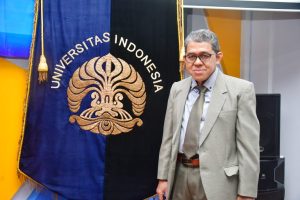
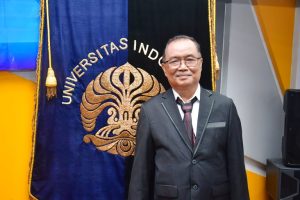
This open session was led by the Dean of FMIPA UI, Prof. Dede Djuhana, Ph.D., who acted as the Chair of the Session. The dissertation promoter team consisted of Dr. rer. nat. Yasman, M.Sc. (Promoter), Hakiki Melanie, M.Sc., Ph.D. (Co-Promoter from the BRIN Chemical Research Center), and Dr. Windri Handayani, M.Si. (Co-Promoter from the Department of Biology, FMIPA UI).
Also present on the occasion were the Head of the BRIN Chemical Research Center, Prof. Dr. Yenny Meliana, M.Sc., along with the Head of the BRIN Raw Materials and Traditional Medicine Research Center, Dr. Sofa Fajriah, M.Si.