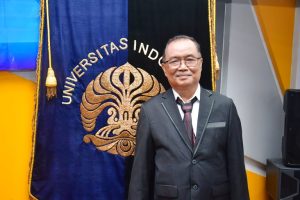
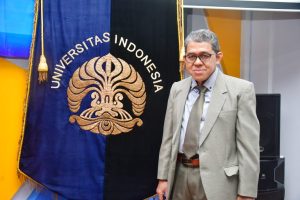
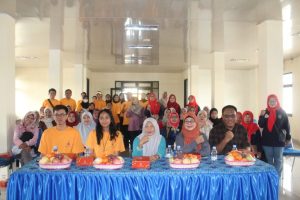
Depok, February 9, 2026 — The Faculty of Mathematics and Natural Sciences (FMIPA) at Universitas Indonesia once again held its weekly public lecture titled UI Geoscience Seminar X STARBORN MENGAJAR 2026 on Monday (9/2), conducted online. Carrying the theme “The Role of Geoscientists in the Field of Geotechnical Engineering in Coal Mining,” the event was attended by approximately 80 students from the Geological Engineering and Geophysics Study Programs.
The seminar featured Muhammad Naufal, S.Si., a Geotechnical Engineer Specialist at PT Borneo Indobara (Sinarmas Mining), as the main speaker. In his presentation, Muhammad Naufal shared insights into his career journey and provided an overview of the topics discussed, focusing on the role of geotechnical engineering in the coal mining industry.
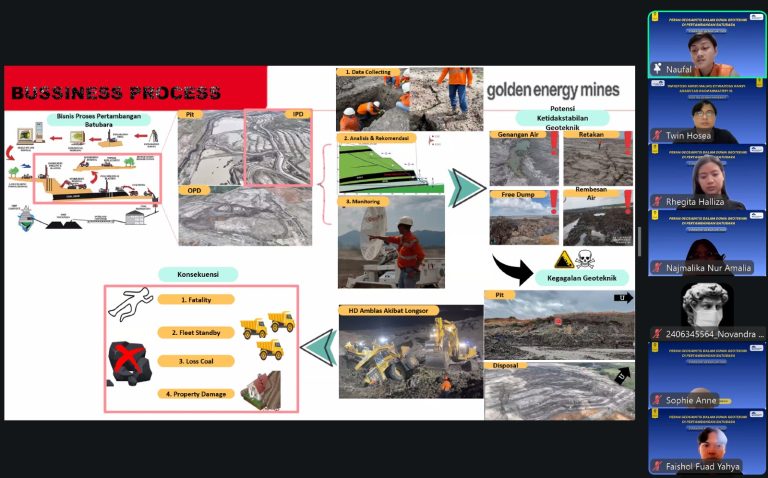
The material presented covered the business processes within a coal mining company, starting from the data collection stage, followed by analysis and the provision of technical recommendations, to monitoring activities. He emphasized that geotechnical engineering plays a crucial role in ensuring that mining operations run safely, effectively, and sustainably. “Geotechnical engineering is not merely about calculating slope stability, but about comprehensively understanding geological conditions so that every technical decision made can minimize risks and ensure occupational safety in the mining area,” he stated.
In addition, participants gained an understanding of various definitions and fundamental concepts in geotechnical engineering, such as the definition of slopes, the concept of landslides, the classification of ground movements, and the types of landslides commonly occurring in mining areas. The discussion then continued with planning aspects within the mining business process, particularly at the stage of slope design and management in mining operations.
From a scientific perspective, the speaker explained the contributions of geology and geophysics to geotechnical studies. In terms of geology, activities such as mapping, well site exploration, field data collection, and laboratory testing play essential roles in supporting slope stability analysis. Meanwhile, from the geophysics perspective, methods such as geophysical logging, subsurface modeling, the use of Ground Penetrating Radar (GPR), and geoelectrical methods to map water and mud zones also contribute to identifying potential geotechnical risks.
The discussion session was conducted interactively, with various questions from students, including inquiries about Muhammad Naufal’s career journey, which did not initially have a direct background in geotechnical engineering before he eventually became a Geotechnical Engineer Specialist. He also shared his experience related to the Initial Pit Design (IPD) analysis of Pit KGS, as well as the potential for major failures that may occur in mining operations.
“Educational background is indeed important, but the willingness to continuously learn and adapt is far more decisive. The field of geotechnical engineering is very open to geoscientists who are willing to deepen their interdisciplinary understanding, both from geological and geophysical perspectives.”
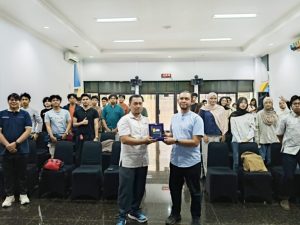
The event concluded with a closing statement from the speaker, followed by the presentation of a commemorative plaque as a token of appreciation, and a group documentation session with all participants.
Through this event, the Faculty of Mathematics and Natural Sciences (FMIPA) at Universitas Indonesia hopes that students will gain deeper insights into the strategic role of geoscientists in the field of mining geotechnical engineering and become better prepared to face professional challenges in the energy and mineral resources industry.
Post Views: 147