|


|
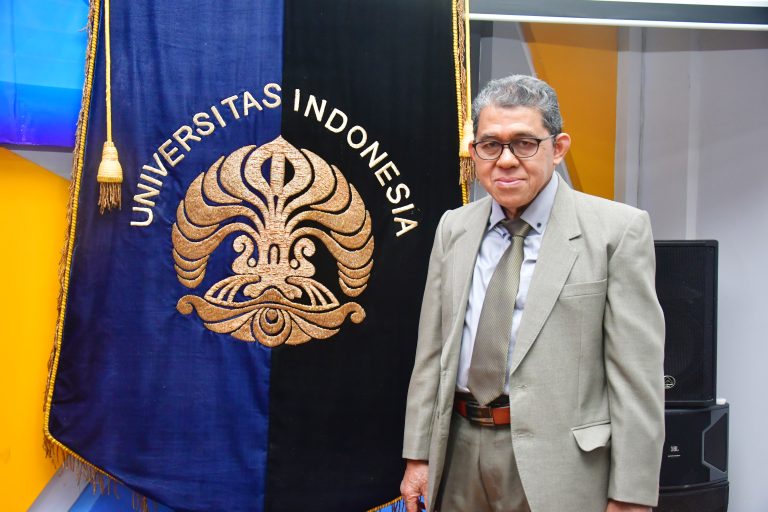
Depok, October 1, 2026 — The need for high-performance materials is one of the challenges in developing nuclear technology in Indonesia, particularly in supporting the use of high-density fuel for research reactors. Addressing this need, Muhammad Husna Al Hasa, a doctoral graduate of the Faculty of Mathematics and Natural Sciences, Universitas Indonesia (FMIPA UI), developed an aluminum alloy with magnesium, iron, and nickel additions as a candidate cladding material for nuclear fuel. The material was developed to provide high strength, good thermal conductivity, corrosion resistance, and thermal stability.
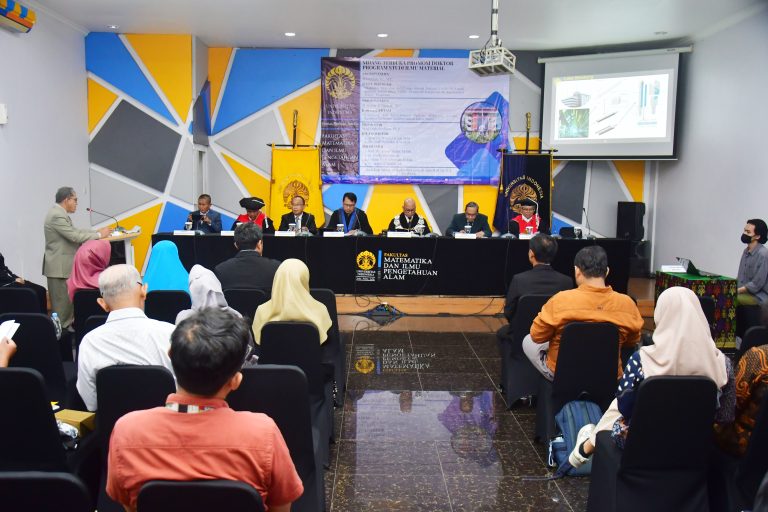
The research was presented in a dissertation entitled “Fabrication and Characterization of AlMgFeNi Alloy as a Candidate Cladding Material for Nuclear Fuel,” which was defended as part of the Doctoral Promotion Examination in the Materials Science Study Program at FMIPA UI. The examination was held at the Prof. G.A. Siwabessy Hall, FMIPA UI, Depok, on Tuesday, September 29, 2026.
Cladding serves as a protective and containment layer for nuclear fuel, keeping the fuel enclosed during reactor operation. For high-density fuel, cladding must be able to withstand heat and radiation, resist corrosion, and maintain its strength and stability.
“What we are looking for is not merely a strong material. Cladding must also be able to conduct heat effectively, remain stable during operation, and have good corrosion resistance. Therefore, we explored the development of aluminum with the addition of magnesium, iron, and nickel,” said Husna.
Aluminum was selected as the primary material because of its low neutron absorption, relatively low weight, and good thermal conductivity. Meanwhile, magnesium, iron, and nickel were added to improve the material’s strength and durability.
The material was produced through several stages, integrating melting, homogenization, rolling, and heat treatment. It was subsequently tested to evaluate its strength, thermal conductivity, structural changes, and corrosion resistance.
The results showed that the material exhibited thermal stability at high temperatures while maintaining a relatively stable structure. The tests also indicated the formation of aluminum-iron-nickel compounds as intermetallic phases that contributed to improving the material’s strength.
The material developed by Husna achieved a hardness of approximately 80.6 HV and thermal conductivity of 201.21 W/mK. The tests also demonstrated good corrosion resistance compared with the reference material.
Husna emphasized that the material cannot yet be considered ready for use in a reactor. Further testing is still required to evaluate its resistance to radiation, compatibility with uranium fuel, and performance under conditions that simulate the reactor operating environment.
“Laboratory research is an initial stage. This material still needs to undergo further testing to determine how it behaves under actual reactor conditions,” said Husna.
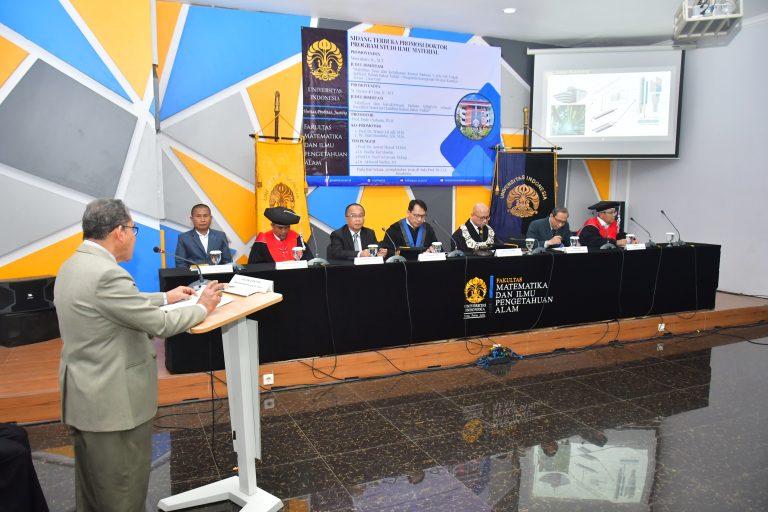
Amid the research process, Husna’s academic achievement also drew attention. He completed his doctoral studies at the age of 68 in six semesters, achieving a GPA of 3.97 and graduating summa cum laude.
His doctoral studies in Materials Science involved a series of research activities, experiments, material testing, and data analysis to develop a candidate material suited to the requirements of nuclear fuel cladding.
For Husna, the process represents a continued journey of learning and advancing knowledge.
“For me, learning does not stop at a certain age. This research has actually made me realize even more that there is still so much to learn and develop,” said Husna.
Husna was supervised by Promoter Prof. Dede Djuhana, M.Si., Ph.D., and Co-Promoters Dr. Djati Handoko, M.Si., from the Department of Physics, FMIPA UI, and Prof. Dr. Wisnu Ari Adi, M.Si., from the Advanced Materials Research Center, National Research and Innovation Agency (BRIN).
This research represents one of FMIPA UI’s contributions to the development of materials supporting nuclear technology. Its findings may serve as a basis for further research before the material is evaluated more extensively for potential use in reactor environments.