|


|
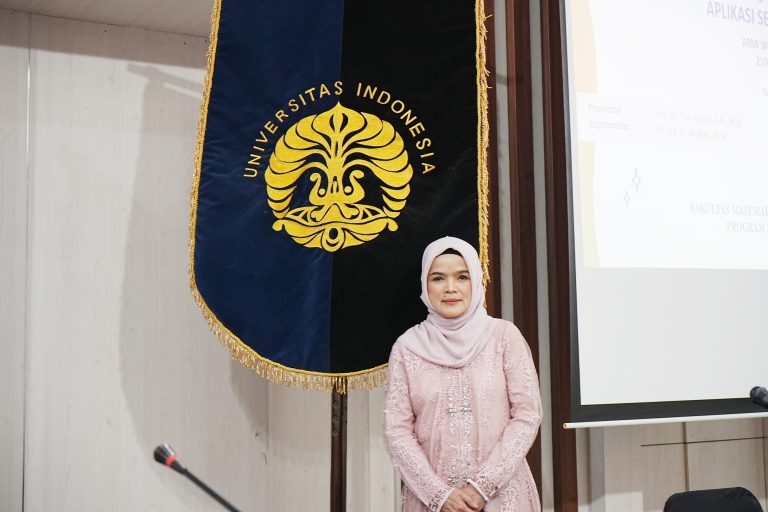
Depok, July 28, 2026 — Efforts to strengthen energy security and accelerate the transition toward cleaner energy have driven the development of various alternative energy technologies, includingfuel cell. Addressing this challenge, Armi Wulanawati, a doctoral graduate of the Chemistry Study Program at the Faculty of Mathematics and Natural Sciences, Universitas Indonesia (FMIPA UI), developed a key component of fuel cells using alternative materials.
Armi's research focuses on developing a membrane electrode assembly (MEA), a key component of fuel cells that facilitates the conversion of chemical energy into electrical energy. The MEA was developed using a combination of polymer materials, polyaniline, silica and alumina nanoparticles, and hemin as an alternative to platinum-based catalysts.
The research was presented during the Doctoral Promotion of the Chemistry Study Program, FMIPA UI, held at the Pertamina Multidisciplinary Research Laboratory Building, FMIPA UI, Depok, on Wednesday, July 8, 2026.
“The development of fuel cell technology requires materials that not only deliver high performance but also support material diversification and the advancement of more sustainable energy technologies,” said Armi.
A fuel cell is a technology that generates electricity through chemical reactions. Unlike conventional power plants that produce electricity by burning fuel, fuel cells convert the chemical energy stored in fuel directly into electrical energy through an electrochemical process.
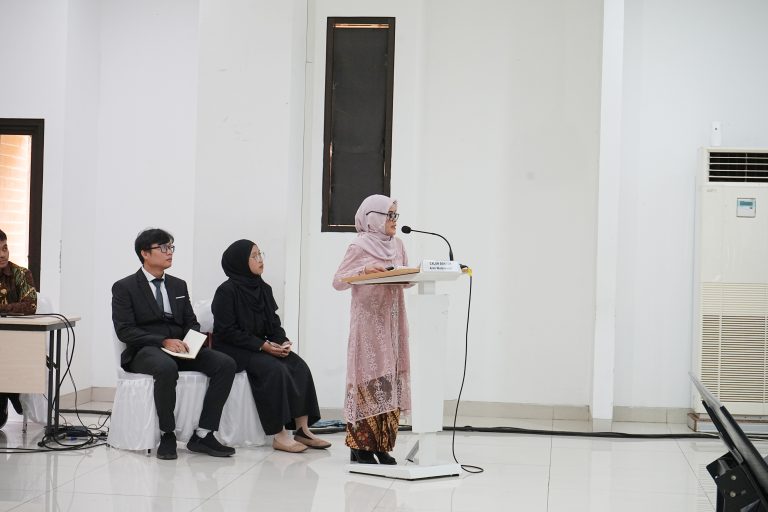
In her dissertation, titled "Engineering a Membrane Electrode Assembly Based on Sulfonated Polysulfone, Polyaniline, and SiO₂/Al₂O₃ Nanoparticle Composites with a Hemin Catalyst for Fuel Cell Applications," Armi developed a Membrane Electrode Assembly (MEA) for use in direct methanol fuel cells (DMFCs), a type of fuel cell that uses methanol as its fuel.
One of the key challenges in fuel cell development is identifying membrane materials that can efficiently conduct protons while maintaining the mechanical strength and durability required under fuel cell operating conditions. To address this challenge, Armi used polysulfone as the base material for the membrane.
Polysulfone offers excellent thermal and chemical resistance. However, to improve its proton conductivity, the material must undergo chemical modification. This modification enhances the membrane's ability to absorb water and conduct protons, but it may also make the membrane more brittle.
Armi then incorporated polyaniline along with nanoscale silica and alumina particles. This combination was designed to enhance the membrane's proton conductivity while maintaining its mechanical strength and structural stability.
In this study, the silica and alumina nanoparticles were synthesized using a more environmentally friendly method by utilizing an extract from kedondong duri (Spondias mombin). This method produced nanoparticles with an average size of approximately 20 nanometers, equivalent to about one fifty-millionth of a meter.
In addition to developing the membrane, Armi also investigated the use of hemin as a catalyst to accelerate the chemical reactions within the fuel cell. Hemin was explored as an alternative to reduce dependence on platinum, which has long been the primary catalyst used in fuel cell technology.
“This study demonstrates that engineering a Membrane Electrode Assembly (MEA) based on composite materials with a hemin catalyst has the potential to deliver strong performance. These findings provide a foundation for further research on the development of advanced materials and fuel cell technologies,” said Armi.
Performance tests showed that the developed MEA achieved an open-circuit voltage of 1.054 V and a maximum power density of 154.10 mW/cm². The material also demonstrated excellent proton conductivity and high resistance to oxidative degradation.
The tests also showed that the MEA exhibited low methanol crossover, an important characteristic because excessive methanol permeation from one side of the membrane to the other can significantly reduce fuel cell performance.
The development of this technology is highly relevant to Indonesia’s efforts to strengthen energy security and expand the use of alternative energy sources. Fuel cell technology has the potential to become a key component of the country's energy diversification strategy, as it generates electricity through electrochemical processes while producing relatively low pollutant emissions.
In this context, Armi’s research is significant because it not only focuses on improving fuel cell performance but also explores alternative materials for their key components. Furthermore, the use of plant extracts in the synthesis of nanomaterials highlights the potential of adopting more environmentally friendly approaches in the development of advanced energy technologies.
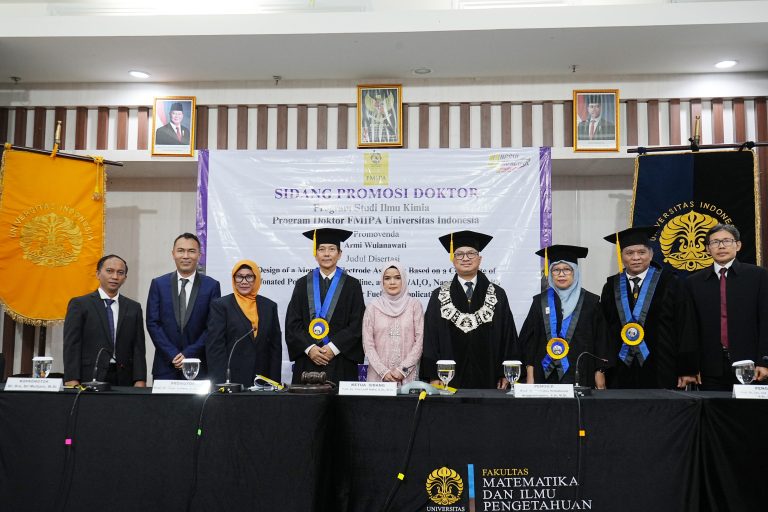
Armi completed her doctoral studies in 10 semesters, graduating with a GPA of 3.84 and earning the distinction of Very Satisfactory. The doctoral promotion was chaired by Prof. Dr. Tito Latif Indra, M.Si., Dean of FMIPA UI, who served as the Chair of the Examination Committee. Armi was supervised by Prof. Dr. Yoki Yulizar, S.Si., M.Sc., from the Department of Chemistry, FMIPA UI, as her Promoter, and Dr. Dra. Sri Mulijani, M.Si., from the Department of Chemistry, IPB University, as her Co-Promoter.