All stakeholders in Indonesia are urged to collaborate in optimizing the vast potential of biodiversity as a driver of the economy, community welfare, and as a key asset for strengthening conservation efforts.
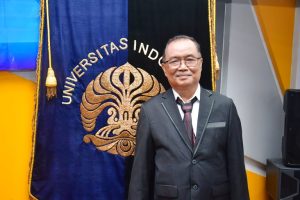
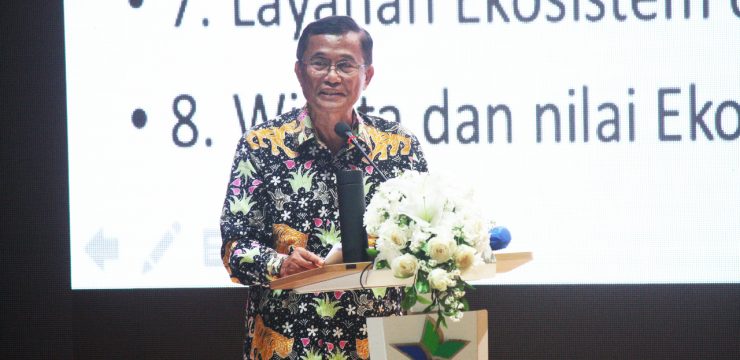
This was conveyed by Professor of Biology at the Faculty of Mathematics and Natural Sciences, Universitas Indonesia (FMIPA UI), Prof. Dr. Jatna Supriatna, M.Sc., during the Widjojo Nitisastro Memorial Lecture (WMNL) 2022. The lecture was part of the series of events commemorating the 32nd anniversary of the Indonesian Academy of Sciences (AIPI), held at the National Library Auditorium in Jakarta on Thursday, October 13, 2022.
At the event, which was officially opened by Indonesia’s 11th Vice President, Professor Boediono, he stated that it is estimated there are around 300,000 species of wildlife in Indonesia, accounting for 17% of the world’s total wildlife species — even though Indonesia covers only 1.3% of the Earth’s surface.
Indonesia's wildlife is also highly unique because it originates from both the Asian and Australian continents, as well as a transitional zone between the two, resulting in a region known as Wallacea, where the fauna is a mix of both.
“This is a blessing that must be managed and utilized,” said Prof. Jatna, as quoted from https://forestinsights.id/.
One of the ways to do this is by developing biodiversity-based ecotourism.
This has already been implemented in several locations. For example, wildlife tourism to observe orangutans in their natural habitat can be found in Tanjung Puting National Park, Gunung Palung National Park, Leuser National Park, and even in community-managed areas such as Tangkahan in North Sumatra.
Each tourist is required to pay a fee of around 60–100 US dollars per day of visit, with tour package costs reaching up to 2,500 US dollars per visit, including amenities, transportation, and accommodation.
“Biodiversity should not be seen as an obstacle, but as an opportunity. In Rwanda, the fee to see gorillas reaches 120 US dollars, while in Malaysia, the fee to see orangutans is also over 100 US dollars,” said Prof. Jatna.
“Indonesia must also be able to take advantage of this, as we have the third highest number of primate species in the world, in addition to having three species of orangutans,” said Prof. Jatna, whose name has been immortalized in one of the primate species, Tarsius supriatnai, found in Gorontalo Province.
According to him, by utilizing the potential of biodiversity, the economy will grow, and more funding will be available for forest preservation and biodiversity conservation.
He invited biologists in Indonesia to collaborate with economics experts in exploring opportunities to utilize biodiversity for the economy in support of sustainability.
He warned that if the sustainability of biodiversity is disrupted, the stability and balance of ecosystems will be shaken, which could have harmful impacts on humans.
Prof. Jatna gave an example of the increasing consumption of fruit bats (kalong) in Sulawesi. In the past, the supply of fruit bats came only from North Sulawesi, but now they have to be sourced from across the entire Sulawesi mainland.
“Yet fruit bats are known to be good hosts for zoonotic diseases, including COVID,” he added.
News source : https://sci.ui.ac.id/
Post Views: 110