|


|

Indonesia has a high wealth of biodiversity, so it is known as a mega diversity country. Biodiversity refers to the variation of biological resources from the ecosystem, species, and genetic levels. This wealth of biodiversity is maintained through various landscapes that function as natural habitats for biodiversity. However, the recent climate change conditions have had an impact on biodiversity conservation efforts.
Biology experts from the Faculty of Mathematics and Natural Sciences, University of Indonesia (FMIPA UI), namely Dr. Nurul L. Winarni, Dr. Luthfiralda Sjahfirdi, M.Biomed., and Dr. Windri Handayani, M.Sc., also shared their views on the impact of climate change on biodiversity conservation in Indonesia, through a webinar entitled "Climate Change and Its Impact on Biodiversity Conservation in Indonesia", which was organized by the Technical Implementation Unit (UPT) for Occupational Safety, Health and Environment (K3L), University of Indonesia (UI), on 22-23 August 2023. The three were invited as keynote speakers at the event.
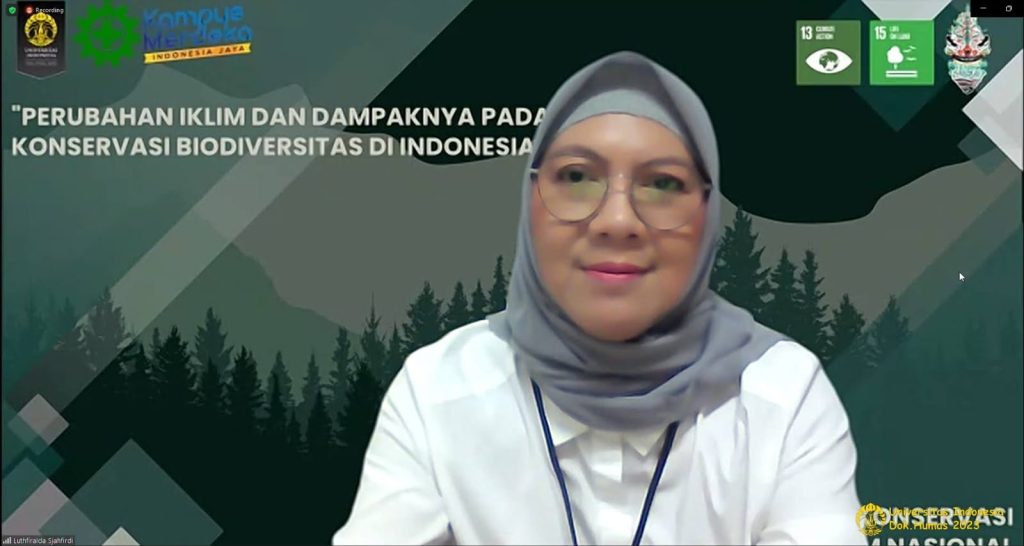
Environmental biology and wildlife conservation expert Dr. Luthfiralda said that the conservation carried out was an effort to preserve flora and fauna which aimed to maintain the existence of animal and plant populations in an ecosystem.
"These conservation efforts are implemented in areas that have unique characteristics, such as being inhabited by rare and endemic species, or threatened with extinction, or having great potential for use if preserved," said Dr. Luthfiralda in her presentation material.
Furthermore, regarding the methods that can be carried out, Dr. Luthfiralda explained that there are two methods of natural resource conservation, namely in-situ and ex-situ methods. In-situ conservation is a flora/fauna conservation activity carried out in the original habitat area, such as nature reserves (nature reserves and wildlife sanctuaries) or nature conservation areas (national parks, forest parks, and nature tourism parks). Meanwhile, ex-situ conservation is a flora/fauna conservation activity carried out outside the area, for example botanical gardens, zoos, or safari parks.
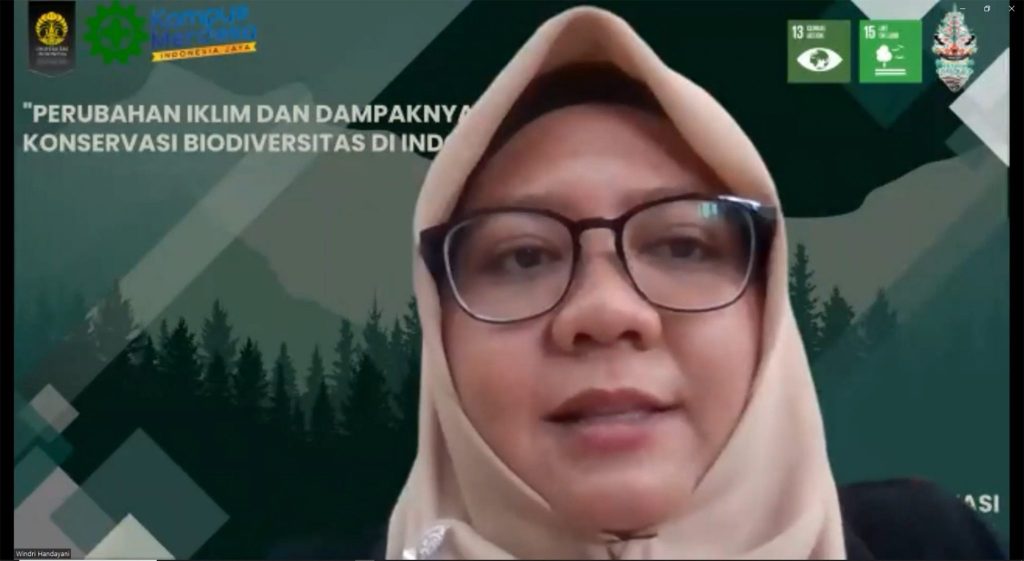
According to Dr. Windri, Indonesia as one of the regions with the highest level of biodiversity in the world plays an important role in preserving various types of endangered flora, especially if the flora is endemic and difficult to find in other regions.
"There are at least two biodiversity values in flora, namely visible values (medicine, agriculture, ecotourism) and invisible values (climate regulation, preventing soil erosion, providing clean water). Therefore, the utilization of flora in Indonesia must be carried out by prioritizing the principle of conservation to ensure the sustainability of commercialized flora species," said Dr. Windri, an expert in plant ecophysiology and environmental metabolomics.
Dr. Windri added that there are two key strategies to deal with climate change, namely mitigation to reduce the rate of climate change by reducing greenhouse gas emissions, and adaptation, namely helping nature and human communities adapt to climate change that has already occurred.
Not only flora, conservation is also needed to maintain the sustainability of fauna. Dr. Nurul saw that there is a very significant impact of climate change on the biodiversity of flora and fauna. Climate change threatens the loss of animal habitat, changes in the distribution of plants and animals, changes in abundance, and changes in phenology (breeding, migration, and so on).
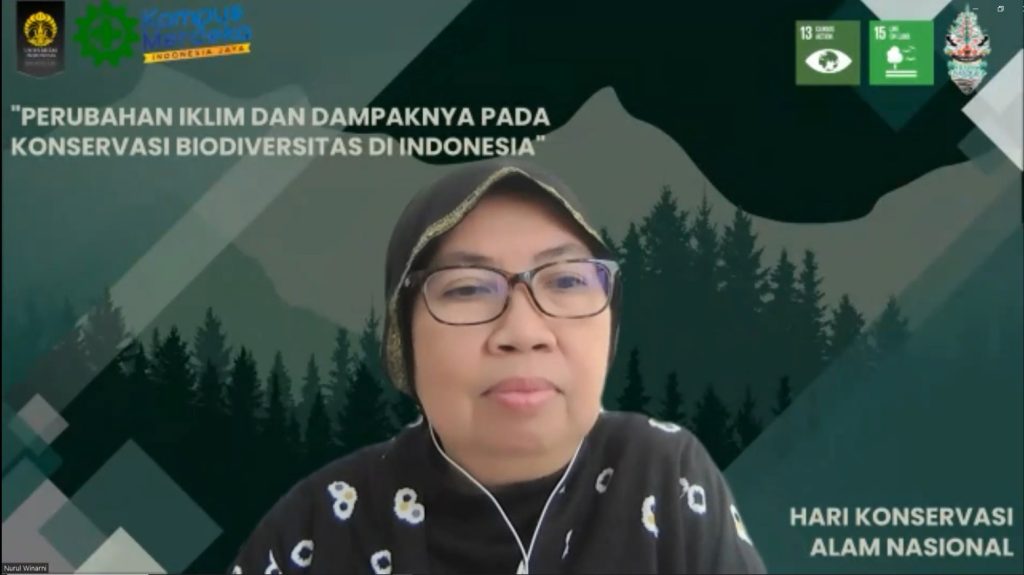
The biodiversity conservation expert gave an example of the impact of deforestation. Deforestation causes changes in rainfall and increases the chances of forest fires. This is because plants that function to protect the forest from the heat of the sun are lost, resulting in drought. If the forest experiences a major fire, various types of fauna will lose their habitat so that they will migrate to other places.
"The massive distribution of plant and animal species also changes the characteristics of biomes and the structure and function of ecosystems, so that the supply of oxygen, clean water, food, medicine, and protection against disasters also changes," said Dr. Nurul.
The relationship between climate change and all aspects of human needs is closely related to the points in the Sustainable Development Goals (SDGs). Climate Action in point 13 of the SDGs has an impact on other SDGs points, namely point 2 Zero Hunger, point 3 Good Health and Well-Being, point 6 Clean Water and Sanitation, point 7 Affordable and Clean Energy, point 14 Life Below Water, and point 15 Life on Land.
News source : https://sci.ui.ac.id/