|

|

Coral reefs are one of the most important marine ecosystems, supporting life through their role as fish habitats, reducing wave energy reaching the shore, and serving as tourist attractions. Unfortunately, various threats endanger the sustainability of the vital ecosystem services provided by coral reefs, such as rising sea surface temperatures, which are a driving factor. coral bleaching, illegal coral harvesting, and damage to the reefs caused by tourism activities.
Various efforts have been made, ranging from coral transplantation to mangrove planting to protect against sediment flow from the land. However, in reality, coral reef ecosystems continue to be increasingly threatened by various human activities.
Against this backdrop, the Center for Marine Studies at the Faculty of Mathematics and Natural Sciences, Universitas Indonesia (FMIPA UI), in collaboration with the Karang Lestari Foundation (YKLI), is working to raise public awareness—especially among students—about learning various methods that can support the optimal management of coral reef ecosystems.
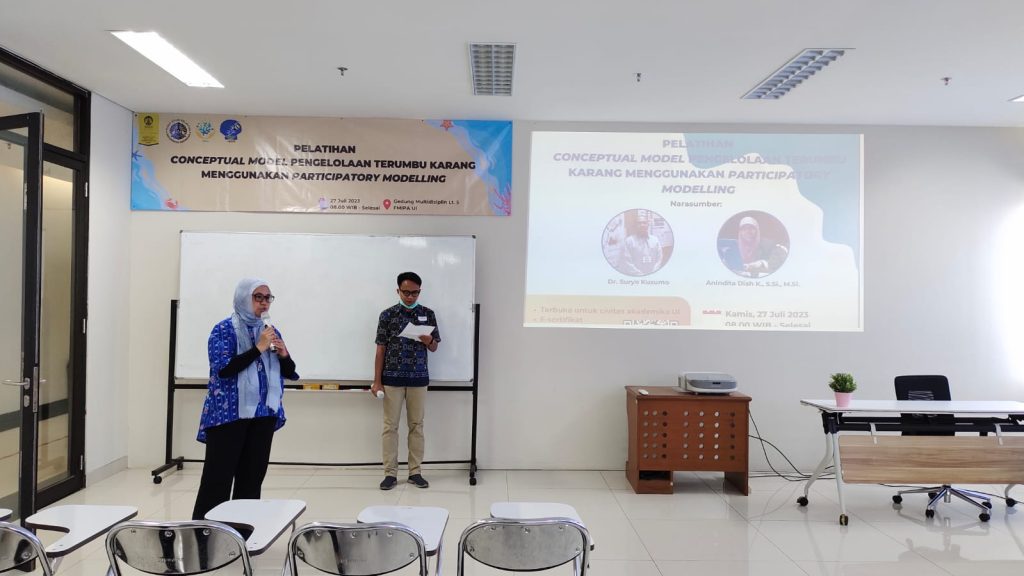
This effort is realized through a training program. Conceptual Model Coral Reef Management Using Participatory Modelling or a coral reef management method based on community resilience. Participatory Modelling is considered one of the methods that has not been widely developed to date.
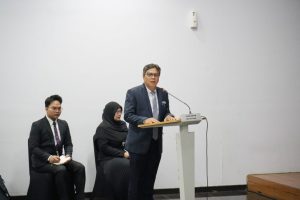
training Conceptual Model Coral reef management using Participatory Modeling is to introduce basic concepts system thinking in coral reef ecosystem management, and applications participatory modelling to students, especially those interested in coral reef ecosystem research,” said Head of the Center for Marine Studies at FMIPA UI, Dr. Riani Widiarti, M.Si., explaining the purpose of the activity on Thursday.
according to him, the introduction participatory modelling this is very important to be used in research related to coral reef ecosystems in particular, and marine ecosystems in general. This is because Participatory modelling it emphasizes local community knowledge of the current condition of the ecosystem and the threats it faces, thereby helping to inform decision-making in ecosystem management.
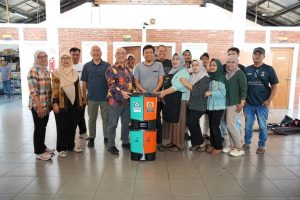
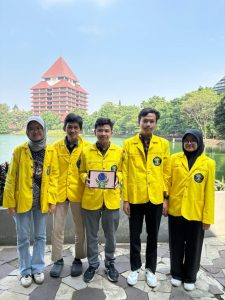
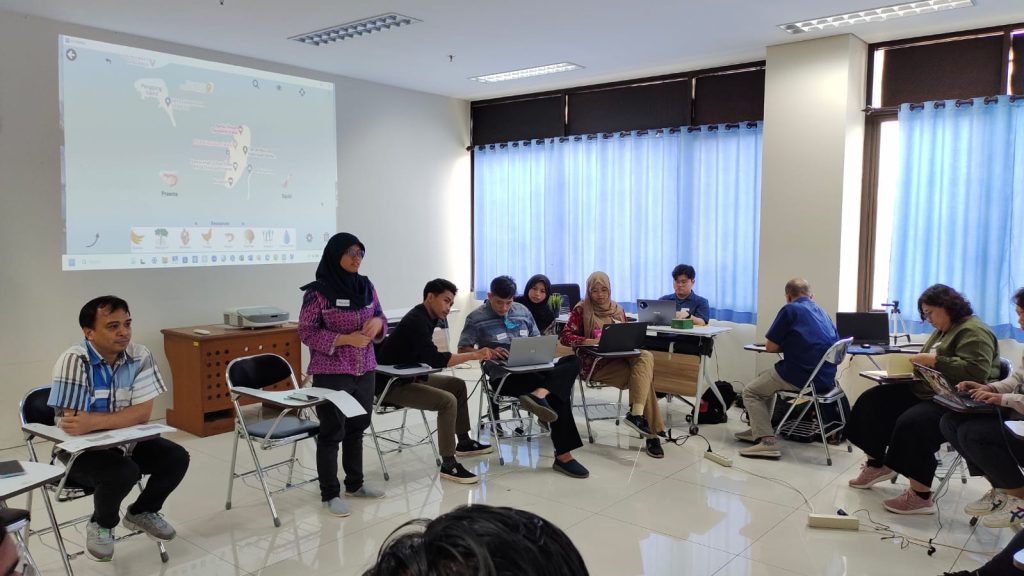
The training, held at the Multidisciplinary Research Laboratory Building of FMIPA UI – PT Pertamina, UI Campus, Depok, involved 30 participants consisting of teaching staff and students from the Geology and Geophysics Study Programs, the Department of Biology, the Department of Geography, the Master's Program in Marine Science, and the School of Environmental Science at UI.
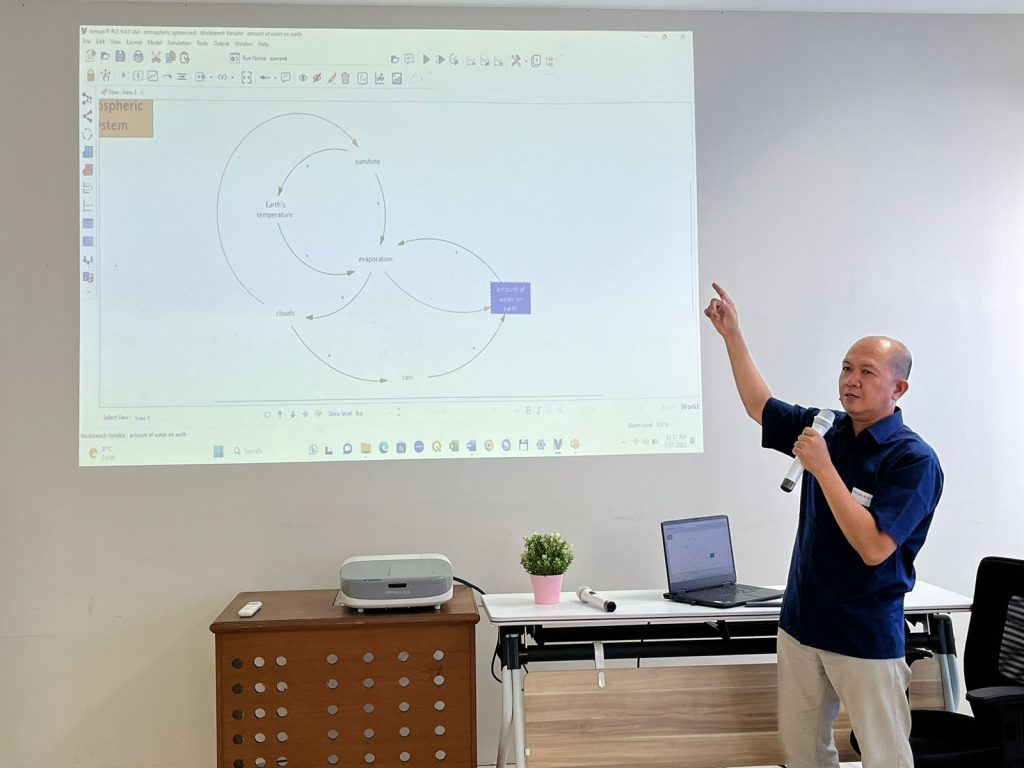
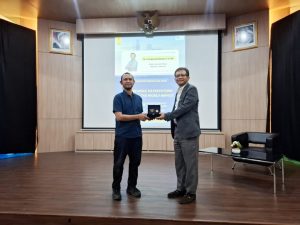
Dr. Suryo Kusumo, as the Chair of YKLI and also a speaker at the training, delivered training material on the method System theory – System thinking – Mental model, Causal loop diagram/Conceptual Model for coral reef ecosystem management.
In System theory, participants are introduced to the concept of ‘system’ and its characteristics. In the introduction section System thinking, participants are introduced to the important points in System thinking, namely the concept of the dependence of all elements.
“This concept has been applied in ecological, economic, political, and even social research. Coral reef ecosystem management is viewed as a unified social-ecological system, where the social and ecological aspects are not separated,” said Dr. Suryo.
Participants were also introduced to the concept of mental models, which are an important component for understanding a system.
“A person’s understanding of a mental model will influence the functionality of the system being developed,” he said.
Meanwhile, through the method Causal loop diagram, Training participants are introduced in more depth to the thinking structure of conceptual models. Causal loop diagram used to explain the relationship between variables in a system, which will later be depicted in system behaviour.
The relationship between variables can add (+) or subtract (−). The combination of relationships between variables in a system can produce a loop (+) or a loop (−). reinforcing, and can also produce a loop (-) or balancing. Participants in the training are also given examples of simple systems such as atmospheric systems, natural systems, and economic systems.
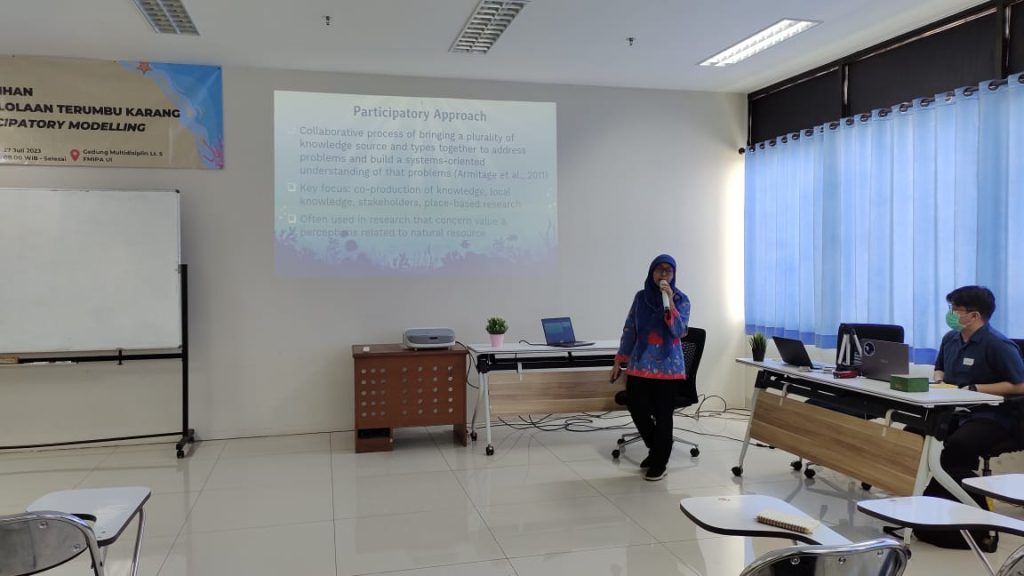
Another resource person, Anindita D. Kusumawardhani, M.Si. as a research team at the Center for Marine Studies, FMIPA UI explained about the theory Participatory Modelling coral reef management. In this session, Anin explained the concept of a participatory approach, and the concept participatory modelling dalam system dynamics.
“With participatory modelling “Exchange of knowledge between stakeholders is key. Local knowledge of the community, in particular, is considered key to solving environmental problems,” Anin said.
Focus Group Discussion (FGD) is one of the most widely used methods in participatory modelling especially in composing Causal loop diagram of the system to be built. In this session, a case study of the use of participatory modelling in coastal management.
FGD was conducted using scenarios role-play where each training participant is given a role to play and then discuss. The roles created include coastal communities consisting of fishermen, fishermen's wives, fish sellers, community leaders, tourism operators, and village officials. Participants are also given roles as FGD facilitators, operators, and notaries.
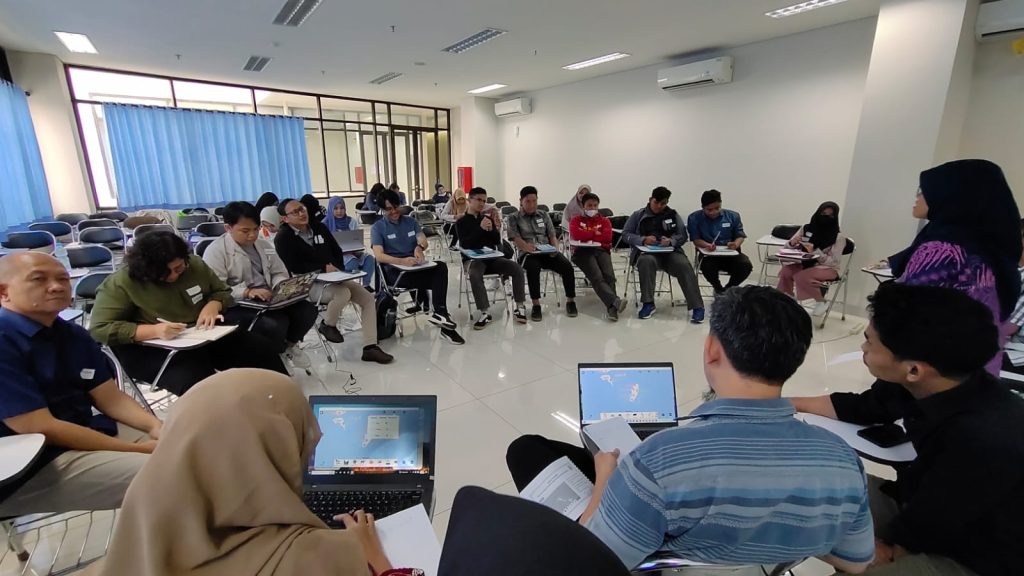
Before the simulation was conducted, participants were guided to install the Socio-Ecological Systems App for Mental Model Elicitation (SESAME) software. Participants were then invited to hold discussions according to their respective roles, with the theme of coastal area management.
Community actors were asked to explain the current condition of coastal ecosystems, and simulate future conditions. Coastal communities were also asked to explain the relationship between each existing ecosystem, and what activities could be a threat to it. The results of the discussion were recorded in minutes, and described in the SESAME application.
News source : https://sci.ui.ac.id/