|


|
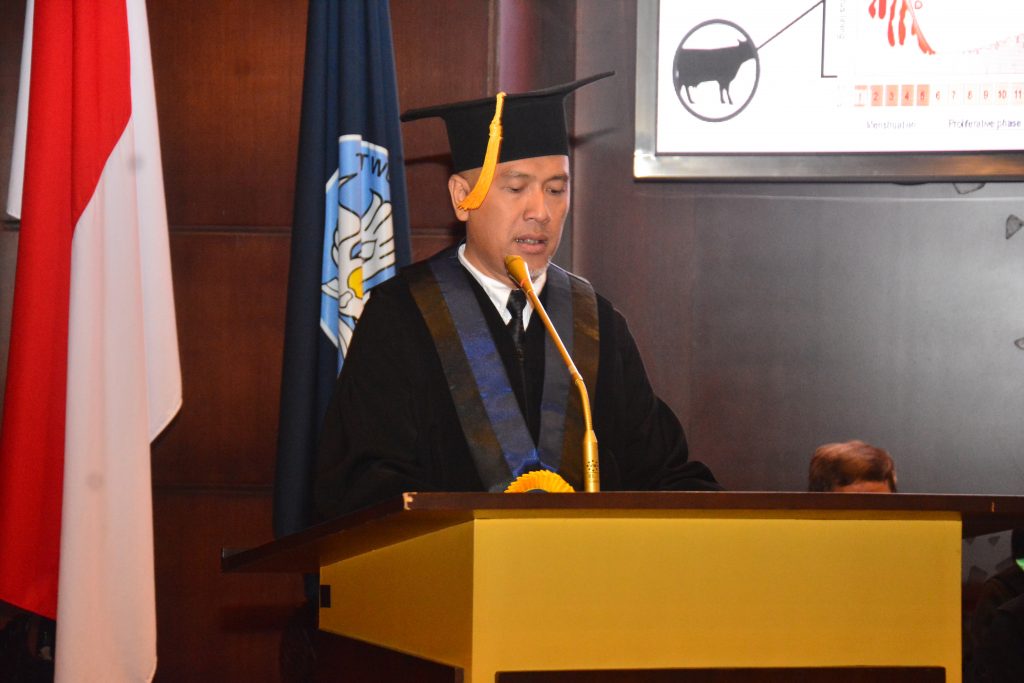
Prof. Anom Bowolaksono, Ph.D. was inaugurated as Professor in the Field of Integrative Cellular and Molecular Biology, Faculty of Mathematics and Natural Sciences (FMIPA), University of Indonesia (UI). The inauguration procession led by the Chairperson of the UI Board of Professors, Prof. Harkristuti Harkrisnowo, SH, MA, Ph.D was held on Wednesday (25/10), at the University of Indonesia Convention Hall, UI Campus, Depok. Prof. Anom was inaugurated as a professor after delivering a scientific oration entitled "Programming Death, Delaying Aging for Sustainability".
In his speech, Prof. Anom said that as is the nature of life, cells have a limited lifespan. However, unlike most humans who want to live long, cells have a death mechanism when they reach a certain point that makes them no longer productive. This biological death mechanism is called programmed cell death (PCD), which allows cells to destroy themselves. There are two main mechanisms of cell death that are currently known, namely unprogrammed (necrosis) and programmed (apoptosis). According to Prof. Anom, apoptosis is an essential mechanism that occurs at various stages of life. This event is involved in the individualization of fingers during the embryo formation process, plays a role in the dorsal closure and rotation of the genital organs during morphogenesis, restores the uterine wall to its initial condition after childbirth, and cleans up body cells that have been damaged and cannot be repaired. "Apoptosis is a conserved mechanism that is fundamental to the survival of life. Dysregulation in the regulation of apoptosis can cause various problems, such as cancer and aging. By studying the basics of programmed cell death, we can program cell death to overcome problems in human life, such as cancer and several other degenerative disorders," said Prof. Anom.
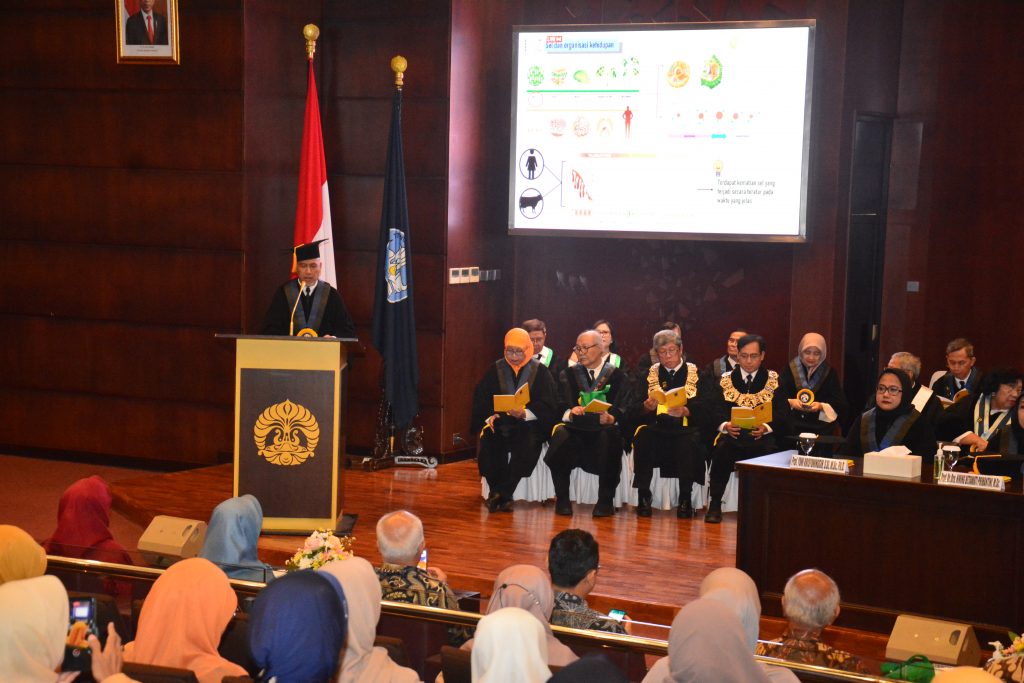
Cancer, which is one of the leading causes of death in the world, is caused by problems in the apoptosis signaling pathway. These problems include an imbalance of proapoptotic and antiapoptotic proteins, decreased caspase function, and impaired death receptor signaling so that cell death required to maintain cell balance does not occur. As a result, cells continue to multiply to form tumors. Thus, understanding the mechanism of apoptosis can lead to new, more effective and specific cancer therapies. In addition to cancer, impaired apoptosis also causes degeneration of organ function, one of the signs of which is aging. One of the effects of aging that has an impact on the continuation of life can be seen in the aspect of female fertility. Research conducted by Prof. Anom shows that the reproductive system is the organ system with the fastest aging rate compared to other body systems. In the female reproductive system, the number of mitochondrial DNA (mtDNA) copies in oocytes and female cumulus cells has been shown to continue to decrease with age. In fact, mtDNA plays an important role in oocyte maturation, successful fertilization, and post-implantation embryo development.
Selain itu, ketiadaan BAX, salah satu faktor proapoptosis, dilaporkan mendukung pertahanan folikel primordial sehingga meningkatkan waktu hidup ovarium dan kesuburan. Oleh karena itu, seiring dengan tren menunda kelahiran dan pernikahan yang terjadi saat ini, pemahaman terkait peran apoptosis dalam penuaan sistem reproduksi wanita dapat mengarahkan menuju pengembangan metodemetode untuk menjaga kesuburan dan merawat kehamilan. Sebelum melakukan kajian tentang mekanisme apoptosis, Prof. Anom telah banyak melakukan penelitian serupa. Beberapa di antaranya adalah The origin and possible mechanism of embryonic cellfree DNA release in spent embryo culture media: a review (2023); The effect of follitropin alfa in controlled ovarian stimulation protocol for in vitro fertilization cycles (2023); dan Cryoprotective effects of longan honey on preantral follicle integrity of rat ovary post vitrification (2023).
Prof. Anom Bowolaksono, Ph.D. graduated with a Bachelor's degree in Biology from the University of Indonesia in 1997; completed a Master's Program in Cell Biology at Okayama University, Japan in 2006; and obtained a Doctorate in Cell Biology from Okayama University, Japan in 2009. He was once an Associate Lecturer in the Department of Biology, FMIPA UI in 2016, and is currently a lecturer in the Department of Biology, FMIPA UI.
The inauguration procession of Prof. Anom was also attended by Professor of FMIPA Bogor Agricultural University, Prof. Dr. Ir. Miftahudin, M.Sc .; Professor of FMIPA Makassar State University, Prof. Oslan Jumadi, S.Sc., M.Phil., Ph.D; Professor of Faculty of Animal Husbandry, University of Papua, Prof. Dr. Ir. Andoyo Supriyantono, M.Sc; Professor of Faculty of Pharmacy Bandung Institute of Technology, Prof. Dr. Elfahmi, S.Sc., M.Sc .; Dean of FMIPA IPB, Dr. Berry Juliandi; and Consultant WHO Ministry of Health of the Republic of Indonesia, Prof. Dr. M. Sudomo.
News source : https://sci.ui.ac.id/